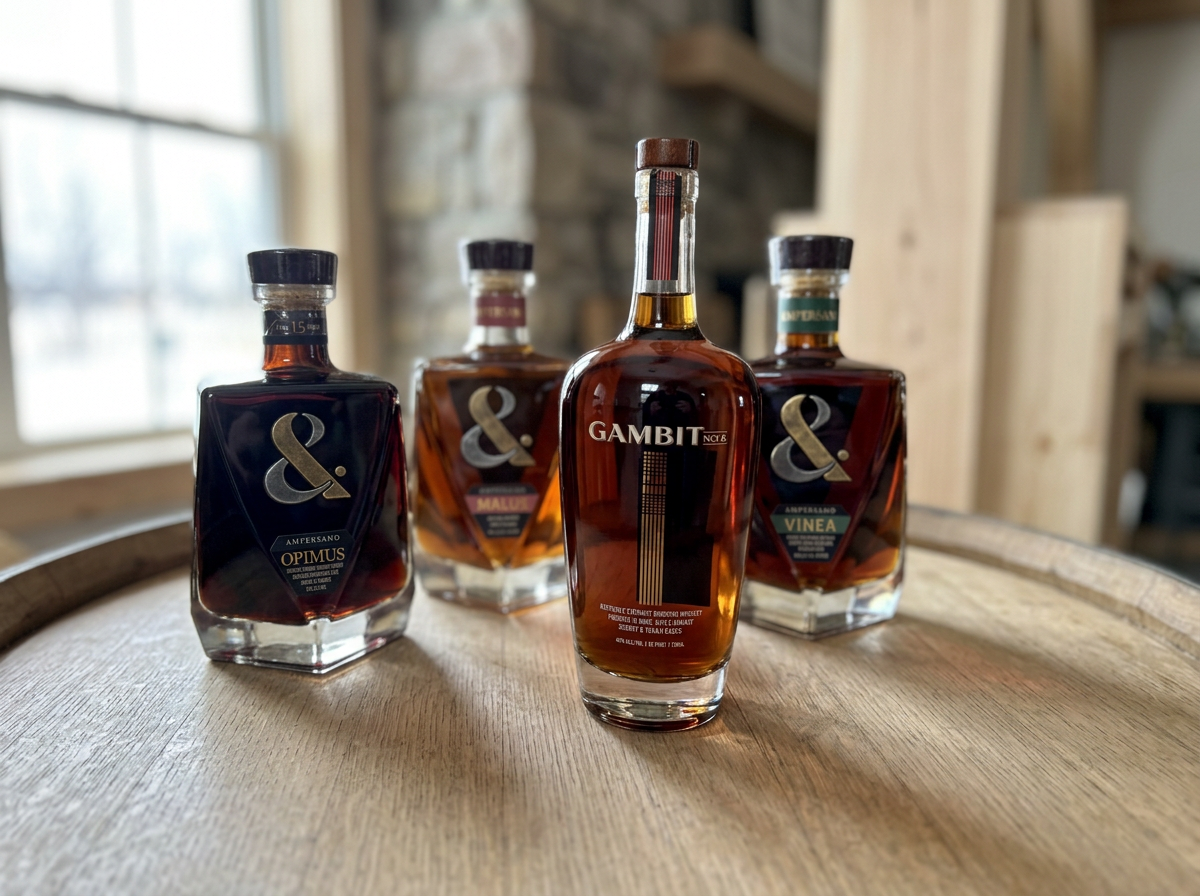
Ampersand Spirits and Gambit No. 6 Reviews
Chip Tate’s current work makes more sense if you resist the urge to treat it as a clean break from everything that came before. And, in fairness to all the work he’s done, I think it’s time to retire Balcones as the most obvious landmark in his career. After years spent building stills, working copper, and consulting, he eventually joined Foley Family Wine & Spirits in 2024. But after speaking with him, the through line feels pretty clear. He remains fascinated by combinations, by taking components with their own strong identities and figuring out whether they can be made to coexist without sanding off what makes each one interesting.
Ampersand became one outlet for that thinking, but Vinea and Malus were not concepts developed after Chip arrived at Foley. Both were essentially worked out already; Foley gave them a home, a brand structure, and a route to market. He described Ampersand as a home for what he called his “lovable curiosities,” generally centered on the intersection of fruit and grain spirits. That framework is broad enough to cover some very different ideas. Malus is almost an even split of rye and Calvados. Vinea pairs rye with neutral grain spirit that spent close to nine years in Cognac casks. Opimus takes mature Kentucky bourbon and puts it through a Tokaji secondary maturation. The commonality is not a recipe so much as a willingness to see what happens when familiar categories collide.
Vinea is probably the strangest origin story of the bunch. Chip had brought Cognac casks back from France and filled them with neutral spirit simply to keep the wood from drying out. What was supposed to be a six-to-twelve-month holding pattern for one project stretched to roughly nine years in Texas heat. By the end, the liquid was deeply colored, heavily tannic, and far more expressive than anything the word “neutral” would suggest. Instead of functioning as a softening or diluting element in the blend, that component became one of its loudest voices. It’s double unique since, let’s be honest, no one would make this on purpose a second time, right?
Malus, for me, is where the Ampersand concept works most naturally. Chip talks about the pairing with something close to a chef’s logic: rye spice alongside the brightness and dryness of Calvados, with little structural echoes inside each spirit. The rye is 95% rye and 5% malt, while the Calvados is 95% apple and 5% pear, a neat if unplanned parallel. Chip gives the blend time to marry and brings it down to proof gradually instead of crash-proofing it, especially as it approaches bottling strength. You know I like slow-proofing; while the risk of saponification is no greater in, say, a Calvados versus a whiskey, it still takes time, time that not every producer has or wants to take.
Opimus starts from a different problem. Chip inherited mature Kentucky bourbon from an unnamed distillery using a 75/13/12 mashbill in Lawrenceburg, KY, that had become somewhat tannic and “chewy” (I had to clarify what he meant by that, since a “chewy” mouthfeel is what I love in whiskey). Rather than trying to mask that character, he used Tokaji to build fruit and additional dimensions around it. His preference for long finishing periods, or what he describes as secondary maturation, is present in both the Opimus and Gambit No. 6 releases. He tends to leave spirit in those casks long enough for the influence to become part of the whiskey’s structure, often well beyond a year. That does not mean every release lands equally for me, but the method behind them is consistent. If the “worst” of the four was a high-7 rating, you’ve done something right.
Gambit No. 6 belongs in a different category altogether: Gambit is its own product line, separate from Ampersand. The philosophy is different too. Ampersand is built around individual experiments; Gambit is about combining a large number of moving pieces into something cohesive and repeatable, more similar to weaving a tapestry. Gambit No. 6 uses six maturation paths involving Cabernet, Chardonnay, Oloroso, Moscatel, Laird’s apple brandy, and Tokaji. That much secondary maturation could very easily turn into cask soup (and plenty of other multi-finish products have done that), especially at 92 proof, yet this ended up being my favorite of the group. Chip compared the blend to a chord, where multiple notes can either clash or resolve depending on how they are tuned together. That description fits. I could isolate the different influences when I went looking for them, but none of them erased the bourbon beneath them. With this many components in play, keeping the base whiskey intact while still letting every part contribute is the mark of excellent blending.
Now just to get ahold of the cask strength version…
Thank you to Ampersand, Gambit, and Foley Family Wine & Spirits for the opportunity to taste these products and interview Chip Tate. All opinions are my own.
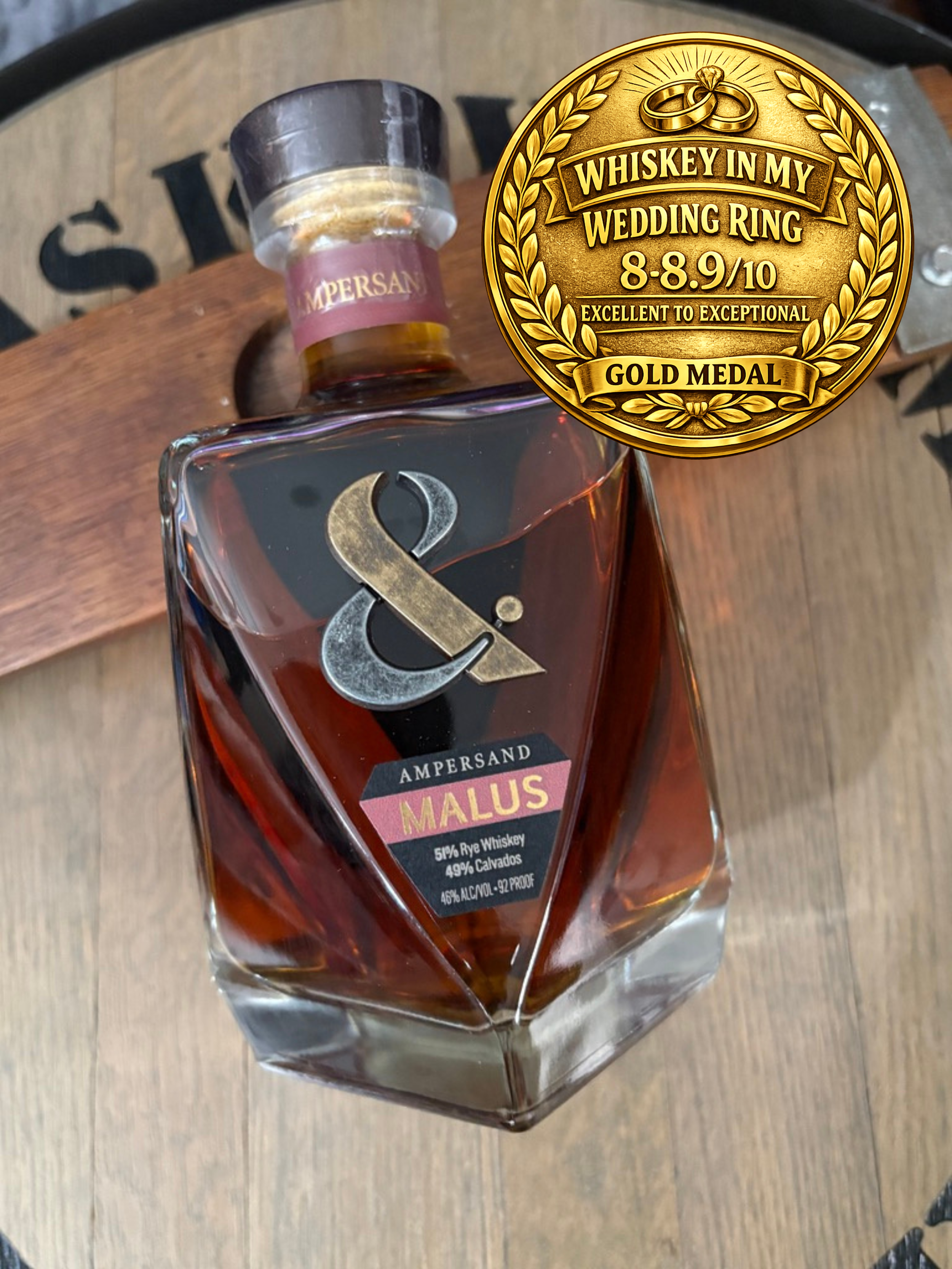
Ampersand Malus
Ampersand Malus: Specs
Classification: Blended Whiskey
Producer: Ampersand Spirits (at Foley Family Wine and Spirits)
Mash Bill: 51% Rye (95/5), 49% Calvados
Proof: 92º (46% ABV)
Age: 8+ Years Old
Location: Waco, Texas and Minden, Nevada
Ampersand Malus Price: $59
Ampersand Malus: Tasting Notes
Eye: Iced green tea. Medium sloughing rims, thick legs, slow drops.
Nose: The toffee apple note on the bottle is spot-on. Bright and fresh apple under a warm caramel. Green apple taffy, I love it.Walking through an orchard with fruit filling on the floor. No proof or astringency.
Palate: Fresher green apples, tart and sweet. Dipped in honey and warm caramel sauce. The green apple taffy remains, not artificial at all, just clear. The whiskey and calvados blend so well, it’s hard to tell where one ends and the other begins. Mouthfeel is mildly astringent, coating, medium-bodied and candied. Tends sweet without going syrupy.
Finish: The spirits separate a bit on the palate to show off, the rye spicy and herbal and the calvados sweet, fruity, and dry. Medium length, coating, dry baking spices and apple chips. Less decadent, no less enjoyable.
Overall: That is just outstanding. The interplay is dynamic, two equally powerful components dancing around each other. It reminds me of an apple sweet tea. A serious wow with only one other known competitor.
Final Rating: 8.8
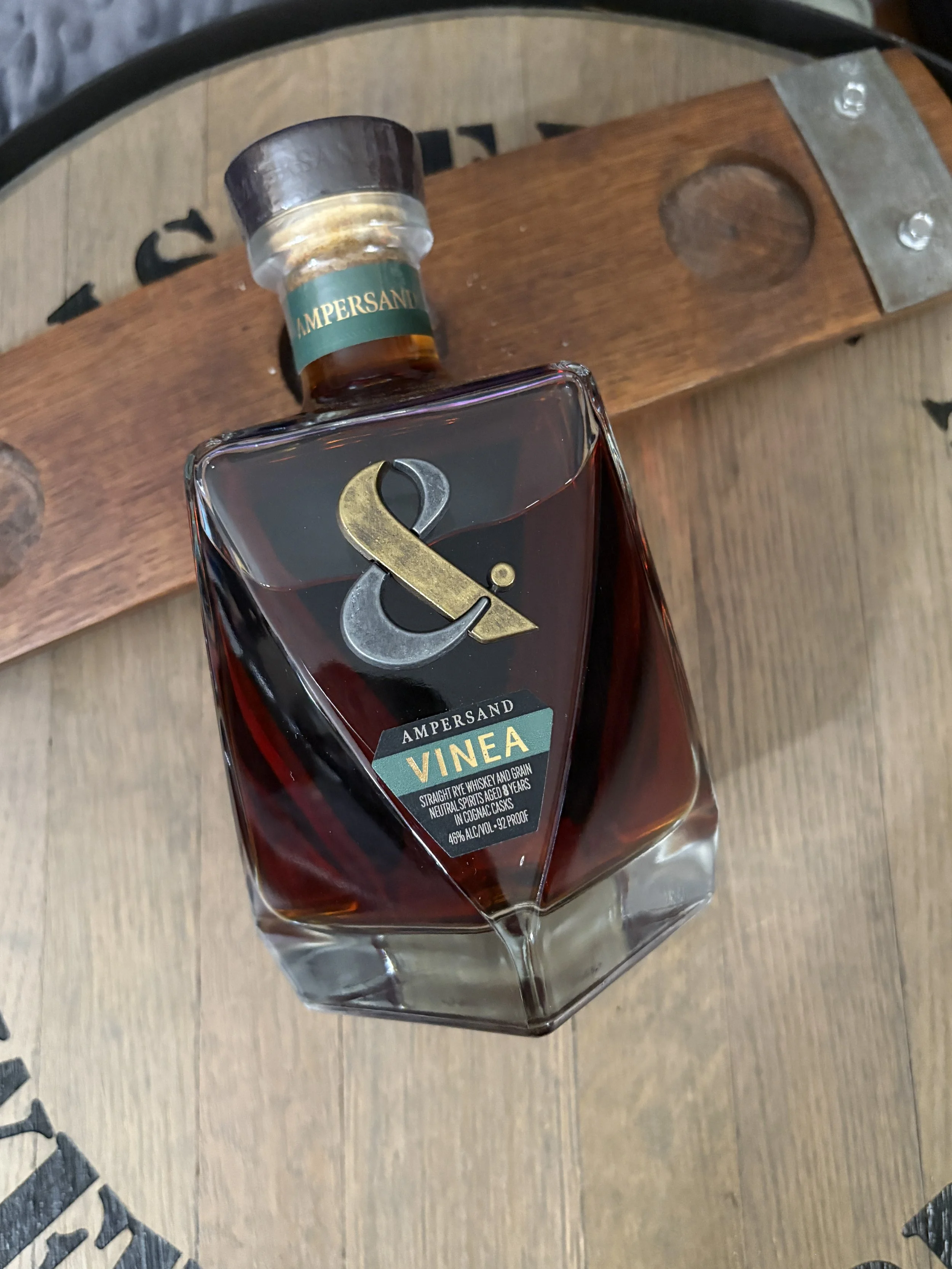
Ampersand Vinea
Ampersand Vinea: Specs
Classification: Blended Whiskey
Producer: Ampersand Spirits (at Foley Family Wine and Spirits)
Mash Bill: 75% Rye (95/5), 25% Grain Spirit Aged in Cognac Casks
Proof: 92º (46% ABV)
Age: 8+ Years Old
Location: Waco, Texas and Minden, Nevada
Ampersand Vinea Price: $59
Ampersand Vinea: Tasting Notes
Eye: Black tea. Medium sloughing rims, quick thin legs, normal droplets.
Nose: Wow - fig city! Intense fig and date, light spearmint notes, pomegranate molasses, middle eastern desserts. Is that the cognac? It’s dominant, not unwelcome. The rye might be 75%, but I get mostly cognac on the nose. Rich and decadent, no proof or oak.
Palate: White pepper hits the tip of my tongue then rolls back, the rye emerging as mint and caramel malted grain. Sassafras, oaked red wine, a hint of Cel-Ray soda, and the black licorice that’s sweet enough you forget it tastes like licorice. Mouthfeel is just shy of syrupy, brownie batter and dried red fruits, oily and coating. Mild astringency around the sides of my tongue.
Finish: Figgy, like a sticky toffee pudding topped with semisweet chocolate. The cognac and rye find a steadier balance here than on the nose. Medium-long, coating, oak lends body and flavor without becoming astringent.
Overall: I’ve got to ask more about the cognac casks, it’s so powerful despite being with NGS. Figs are there from nose to finish. The rye struggles at times to be heard, even at 75% of the blend, but when it does it pairs well and carries the flavors.
Final Rating: 7.8
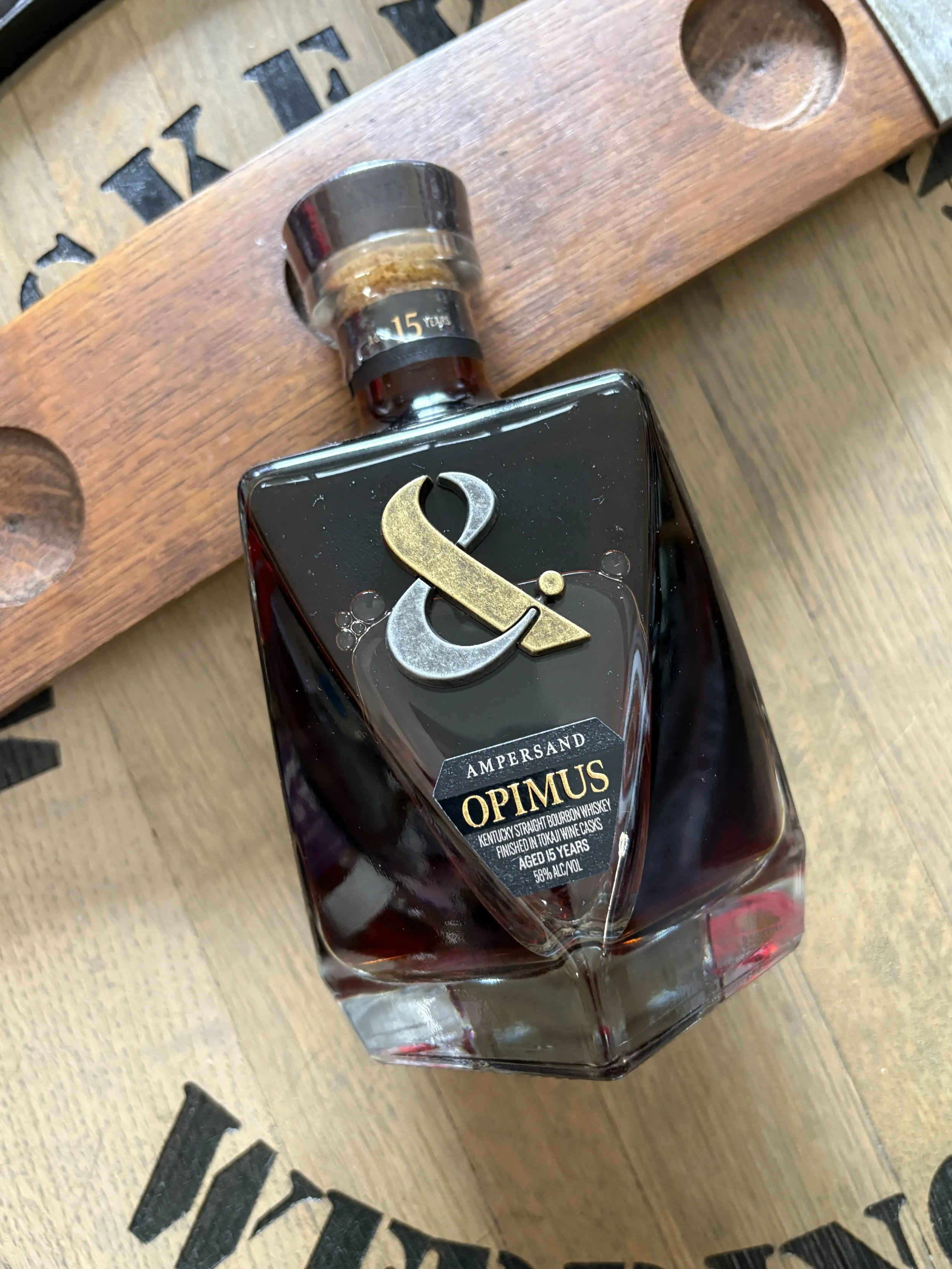
Ampersand Opimus
Ampersand Opimus: Specs
Classification: Blended Whiskey
Producer: Ampersand Spirits (at Foley Family Wine and Spirits)
Mash Bill: 75% Corn, 13% Rye, 12% Malted Barley
Proof: 116º (58% ABV)
Age: 15 Years Old
Location: Waco, Texas and Minden, Nevada
Ampersand Opimus Price: $150
Ampersand Opimus: Tasting Notes
Eye: Maple syrup. No rims, short legs, tiny drops hold on around the bell.
Nose: Knowing where this is from, it smells exactly like that, plus a great leather and dried fruit depth. The tokaji is sweet and decadent, nowhere near overpowering. Older bourbon notes hint at a dusty-esque profile. Warm vanilla sugar and chai.
Palate: Effervescent then tannic and darkly sweet, dates and red spice drops, the older bourbon seriously leaning into the dusty vibe here. Fig filling, cream soda syrup, mouthwatering, real Australian licorice, semisweet chocolate. Mouthfeel is creamy, rich without being too heavy, fills and coats the whole palate. Mild tannins and dark fruit leather, barely any proof.
Finish: The tokaji expands here, still decadent but more tannic and complex with more oak spice and red spice drops. Medium length, less full or coating than anticipated given the palate.
Overall: More maple and fortified wine come out on the nose late, adding to the experience. This is delicious, an easy buy if you are in any way a Wild Turkey fan. The tokaji is well-handled, proof is way below what you’d expect. My only wish is a longer finish and slightly bigger mouthfeel, but it’s hard to complain.
Final Rating: 7.9
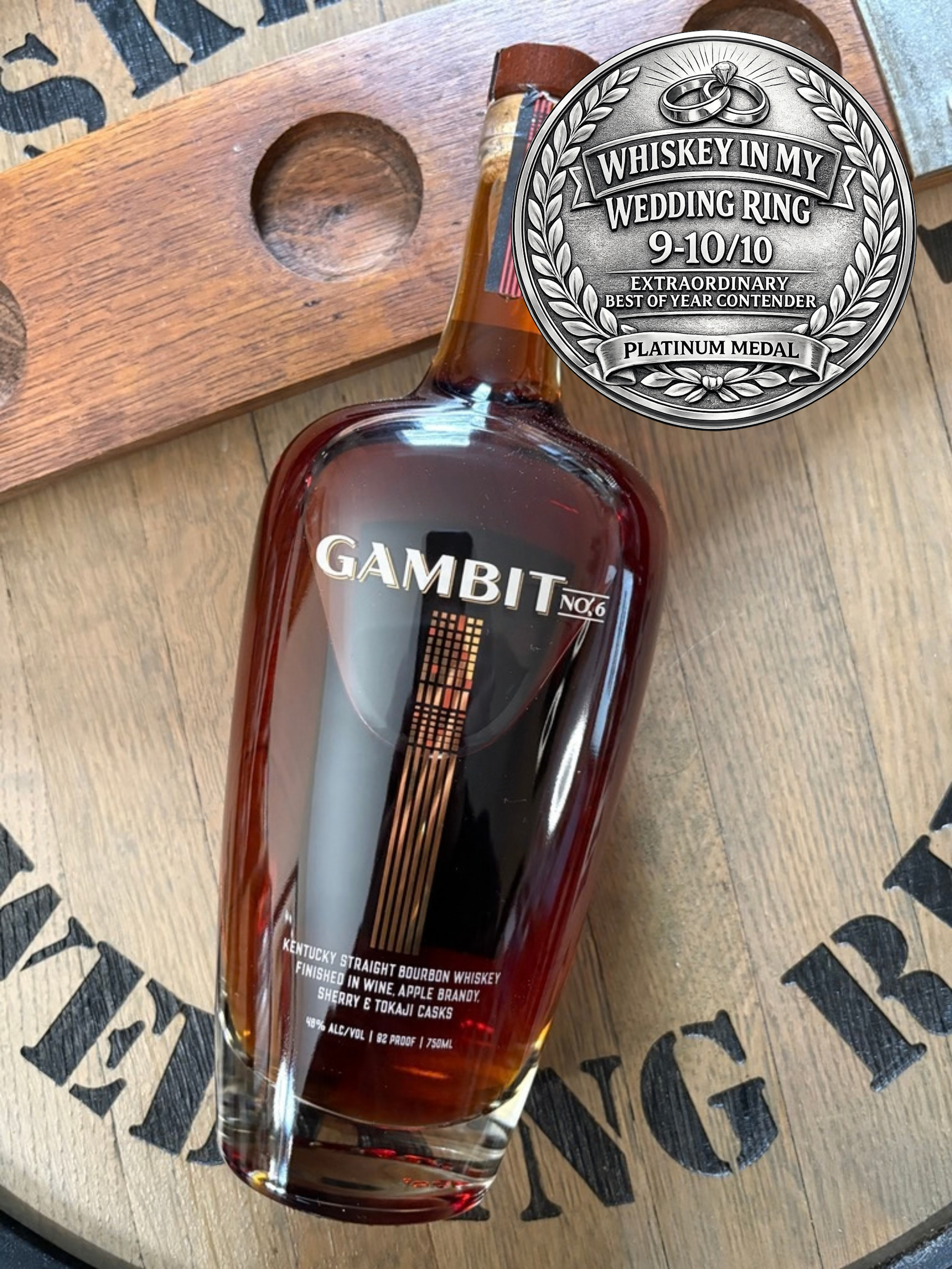
Gambit No. 6
Gambit No. 6: Specs
Classification: Kentucky Straight Bourbon Whiskey, Finished
Producer: Ampersand Spirits (at Foley Family Wine and Spirits)
Mash Bill: 78% Corn, 10% Rye, and 12% Malted Barley
Proof: 92º (46% ABV)
Age: 6 Years Old
Location: Waco, Texas and Minden, Nevada
Gambit No. 6 Price: $69.99
Gambit No. 6: Tasting Notes
Eye: Brown sugar caramels. Medium rims and legs, large teardrops.
Nose: The wine casks and bourbon both hit simultaneously, sweet and vinous without being sickly. No proof, yet the immediate sense is balance. Sharp baking spice opens after the initial burst of flavor.
Palate: A minty pepper hits the tip of my tongue followed by a burst of red, white, and yellow fruit, light astringency like an oaked chardonnay. Dark caramel, tarragon, most of the casks are discernable. Mouthfeel is far above the proof specs, decadent and red fruit coated in chocolate. Mildly piquant, coating, and medium-bodied.
Finish: Brief, soft hit of astringency, bouquet of red fruit and yellow/white fruit flesh. Sweeter and oakier bourbon notes open late, never lost under the casks. Medium-long and coating.
Overall: the balance and interplay is astounding. Mouthfeel, flavor, and texture all exceed expectations for this many finishing casks. The bourbon is never lost despite all the components. This comes across as the same level of balance and skill I felt about the Lost Lantern 50 States of Bourbon release.
Final Rating: 9.0
10 | Insurpassable | Nothing Else Comes Close
9 | Incredible | Extraordinary
8 | Excellent | Exceptional
7 | Great | Well above average
6 | Very Good | Better than average
5 | Good | Good, solid, ordinary
4 | Has promise but needs work
1-3 | Let’s have a conversation
More Whiskey Reviews