Danish Whisky Meets Estate Distilling
We’re heading back to Denmark this week, a country I first visited on the podcast through Stauning way back in year one. Five years later, Danish whisky has grown considerably, and Thy Whisky comes at it from a very different direction (start with many fewer stills and keep adding differences).
I also have Sukhinder Singh to thank for this episode. At the end of our conversation about Tormore, Portintruan, and Elixir Distillers, I asked my usual question: who else should I talk to? Sukhinder immediately pointed me toward Thy and Jakob Stjernholm. Given that Elixir has also bottled Thy through its Whisky Trail releases, he had a pretty good idea of what was happening on this farm in northwest Denmark. Honestly, who would doubt Sukhinder’s instincts at this time.
Jakob is co-owner and Master Distiller at Thy, but calling it simply a distillery undersells the place. The family farm goes back eight generations to 1773, while whisky arrived considerably later in 2010. Today they grow the grain organically, malt it themselves, mash, ferment, distill, mature, and bottle everything on the estate.
The cows are still there too. They get the spent grain and pot ale, since there isn’t enough nearby demand for Thy to share the pot ale with other farmers as many other distilleries around the world might. Everybody wins.
Start With the Grain
Thy’s approach began less with “how do we make whisky?” and more with “what can we make from this farm?” That led them toward barley, but also rye, spelt, emmer, einkorn, oats, and heritage wheat varieties that already made sense in Danish agriculture.
Rye has an especially obvious cultural connection. Rye bread is a basic part of Danish food culture, right down to what Jakob’s kids get in their lunchboxes, so the idea of making rye whisky felt natural rather than imported. I asked him specifically about the connection between starting to distill in 2010 and the Nordic food scene blowing up (see: Noma), and the answer was the same as Stauning: no question.
The deeper grain work came through a group of Nordic breeders working to revive old barley varieties preserved in seed banks. Thy began with roughly 30 heritage varieties, some of which had not been grown commercially for around a century. Getting one of those varieties back into production is not a quick process. The seed bank gives you an amount you can basically hold in your hand, then it takes years of growing, harvesting, multiplying, and repeating before there is enough grain to fill a field, much less a still. For a farm already used to thinking in seasons and generations, that timeline is less nuts than it probably sounds to the rest of us. Add in around a seven-year crop rotation (per parcel, not the whole farm), and there’s only so fast they can grow that grain.
What surprised Jakob was how different the eventual spirits tasted. Modern distilling barley gives them a sweeter, more familiar malty profile, while varieties such as Imperial and Langeland bring different citrus, grassy, earthy, and oily characteristics. Jakob compares it to wine grapes: if everyone had spent decades using one grape because it gave the best yield, then suddenly rediscovered Pinot Noir, Merlot, and everything else, you would probably start asking a few more questions about the raw material. Terroir? Not quite, but damn close.
That work created another problem. Commercial maltings are designed around enormous batches. Showing up with a few tons of resurrected heritage barley and asking for a custom run is not especially practical, so Thy eventually built its own malting system.
Jakob and his brother-in-law traveled around the United States in 2016 visiting craft malt houses and brought those lessons back to Denmark. Among several places they visited, Colorado was a particular focus. After this interview, I introduced Jakob to recent guest Jeff Baker of Hillrock Estate, which also has their own malting floor. Thy’s five-ton drum malting system now lets them work at the scale of individual fields and individual grain varieties, while also malting for other Danish producers.
That control over malting is a huge part of the house style, a style I will get into more in the reviews.
Making Whisky That Feels Danish
Jakob came back several times to the influence of New Nordic cuisine, and it fits Thy remarkably well. The idea is not to preserve an old recipe simply because it is old, but to start with ingredients that genuinely belong where you are, use modern knowledge and techniques, and then build something new to both.
For Thy, that meant asking what whisky might look like if you started in Denmark rather than starting in Scotland and changing the address. Beechwood smoke is probably the clearest example. There is peat in Denmark, including peat soil on Thy’s own land, and they have made small amounts of Danish peated whisky. But peat does not carry the same cultural associations there that it does in Scotland, whereas beechwood is everywhere in Danish life.
It shows up in forests, fireplaces, campfires, smoked bacon, fish, and cheese. Jakob describes it as a sweeter, warmer wood smoke, the kind of smell that feels familiar if you grew up there. Their Bøg single malt (among other releases) uses beechwood-smoked malt because that smoke already belongs to the place, not because they were looking for a Danish version of Islay. Given that Islay has no trees at all, you couldn’t get much different.
The same thinking carries into their rye, which blends rye with spelt and barley. Instead of producing one distillate and relying on casks to create every variation, Thy changes the grain itself and lets that do more of the work. Their fermentations commonly run six or seven days, sometimes longer, building a softer and fruitier profile behind all of that grain character. If you’re a long-time listener, you know I enjoy the flavors created by longer, malolactic fermentations.
From there, they do something unusual even by craft-distilling standards and distill only once. The pot still uses extensive copper contact and a purifier to create reflux, cleaning up the spirit while still carrying through the heavier grain character from the wash. Jakob is fairly open about the fact that they did not begin in 2010 with a perfect technical theory for why the setup worked. They liked the spirit they were getting, kept working with it, and gradually understood why the system suited what they were trying to make. I’m reminded of Boann Distillery, who have a patented still whose condenser has an intensely micro-textured copper coating that gives significantly more copper contact than a smooth pipe would.
Letting the Spirit Survive the Cask
With so much work happening before the spirit reaches oak, Jakob has little interest in burying it under an aggressive cask program. Thy relies mainly on familiar maturation: ex-bourbon, much of it from Heaven Hill, oloroso and PX sherry, and new American oak for some of the rye. They use different sizes, including quarter casks, but the general approach is to support what came before rather than completely rewrite it.
That becomes especially clear when Jakob talks about the heritage grains. If you spend years bringing an old barley variety back into production, grow it organically, malt it yourself, ferment it slowly, and distill it specifically to preserve grain character, it would be self-defeating to bury the result under an overpowering finish. The cask still needs to contribute, obviously, but it does not need to be dominant.
The Danish climate helps. Thy’s warehouse is open to outside air, and the cold, damp, windy coastal environment slows extraction compared with places like Kentucky or Texas. Even new oak can spend several years with the spirit without dominating it, and the annual variation in weather also gives vintage information a little more relevance. Side note: vintage is a fun thing that you can’t include on Scotch whisky labels - thanks, SWA.
Heritage grain harvests can differ from year to year, maturation conditions shift, and Thy is comfortable giving drinkers enough information to compare those changes rather than pretending every batch is identical. Jakob sees vintages as potentially useful vocabulary for whisky in the same way they are in wine, especially when the raw material and maturation environment are allowed to vary naturally. They’re farmers first, and that’s how they conduct themselves.
That same preference for transparency runs through the Danish Whisky Manifesto, created by the country’s producers as the industry has started to define itself. Danish grains, local production, no artificial coloring, and plenty of technical freedom leave producers room to develop their own style without simplifying “Danish whisky” to a label that has very little connection to Denmark. There are now around a dozen distilleries involved, which is a substantial change for a country Jakob says effectively had no whisky industry twenty years ago.
The larger idea for Thy is still single-estate whisky, although Jakob is careful not to limit that to simply owning the field where the grain grew. For him, the real value comes from controlling the choices all the way through: what gets planted, how it is farmed, how it is malted, whether it is smoked, how it ferments, and what happens when it reaches the still.
That is why he sees room for estate whisky to grow far beyond Thy. Wine has trained us to think this way for a long time, and coffee and chocolate increasingly do the same. Whisky, meanwhile, still spends an extraordinary amount of time talking about water while often treating grain as if it just arrives at the distillery loading dock with no further questions required.
Thy is taking a different approach, and Jakob is not trying to turn the farm into an enormous global whisky factory in the process. He wants to keep building the distillery over decades, make the farm somewhere people want to visit, expand into more markets slowly, and leave behind something rooted strongly enough in the place that another generation can eventually take it over. It is a very farmer-like way to think about a whisky business, which is probably exactly what you would expect from a distillery that started with the fields rather than the bottle.
And if I eventually make it over there, Jakob assures me the beaches on Denmark’s west coast are beautiful. He also made sure to clarify that they are very cold.
Thy Whisky
Thy Whisky retailers and stockists
Thy Whisky at The Whisky Exchange
Thank you to Thy Distillery for providing four bottles - all reviewed below - for editorial consideration as part of this interview. All opinions are my own.
If you haven’t joined the Patreon community yet, please consider doing so at patreon.com/whiskeyinmyweddingring
As of October 2026, the $25/month bottle share club level has one open spot!
Join at the $5/month level for first shot at an open spot when a member retires and to keep receiving ad-free episodes via Patreon.
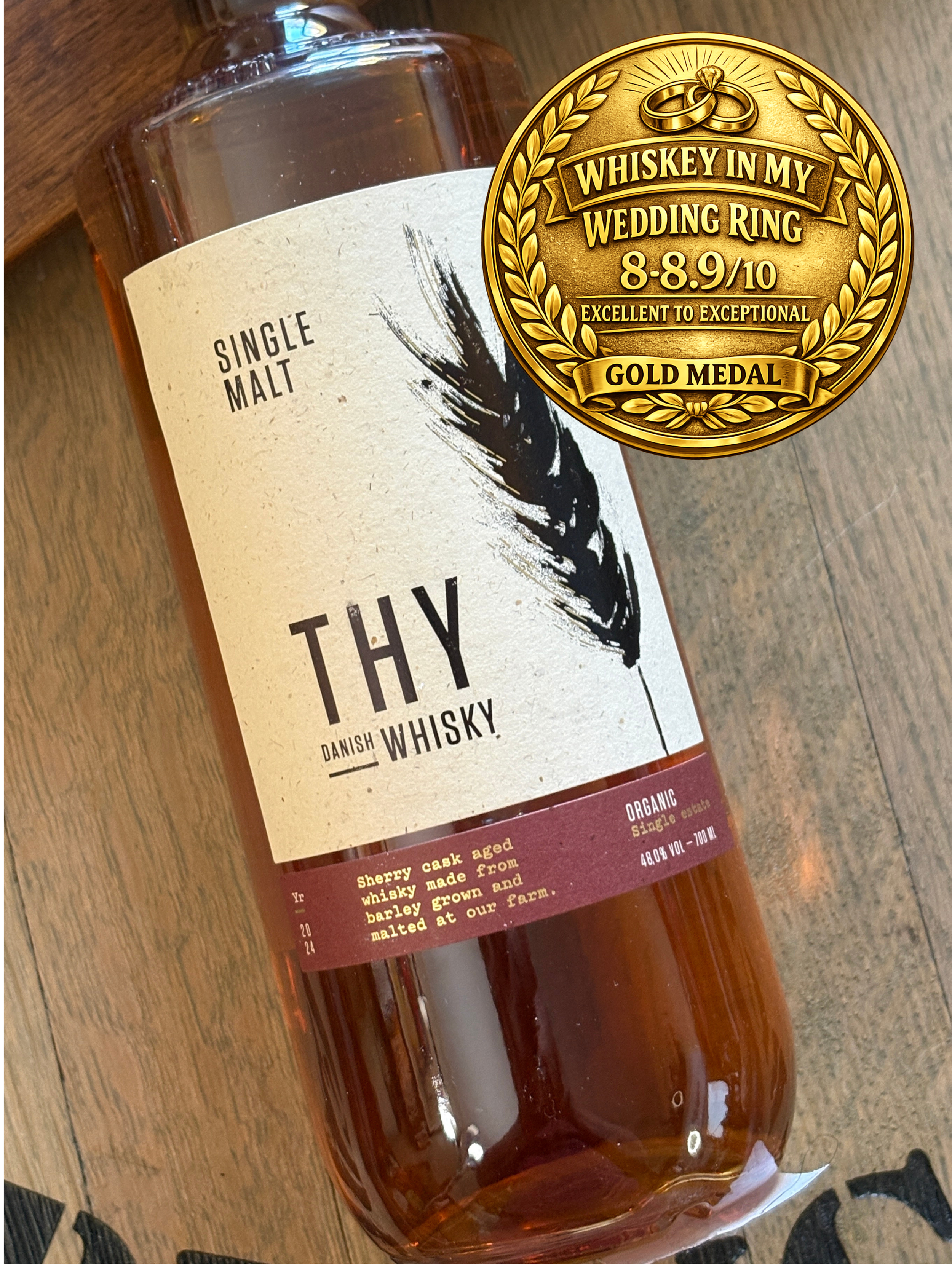
Thy Organic Danish Single Malt: Specs
Thy Organic Single Malt is probably the cleanest introduction to what Jakob means when he talks about “farming whisky.” It is made from 100% estate-grown organic Odyssey barley, with 97% pale malt and just 3% beechwood-smoked malt, then single-distilled and matured across bourbon, oloroso, and PX casks before bottling at 48%.
This is a winner. It is malty, fruity, and chocolaty in all the right ways while staying very well balanced, and the slight barnyard and mature-grain notes give it a character that feels genuinely connected to the farm rather than added later through cask selection. For a first bottle from Thy, this is about as good an introduction as I could ask for: easy buy, elevated everyday drinker, and enough personality to make me want to keep digging into the range.
Classification: Danish Single Malt Whisky
Producer: Thy Distillery
Grain Bill: 100% Malted Barley (around 88% pale malt and 12% beechwood-smoked malt)
Proof: 96º (48% ABV)
Age: 5+ Years Old
Location: Denmark
Thy Organic Danish Single Malt Price: $63
Thy Organic Danish Single Malt: Tasting Notes
Eye: Apple juice, hint of green. Broken thick rims, syrupy legs, all-over drops.
Nose: Lemon and grape jelly, still bright but deeply fruity and vinous. Background notes of clean barnyards and freshly cut hay. Barest oak and gentle oloroso, more fruit than rancio. The same jelly on whole wheat toast.
Palate: Up-front spice on the tip and front third, bracingly fragrant and oaked red wine (Cabernet Sauvignon in particular). Brighter berries and cherries, fresh off the bush and tree. Dark chocolate, light cinnamon, Raisinettes but less sweet. Mouthfeel is mildly numbing on the whole tongue, drying in flavor but not texture, still vinous and chocolaty. Medium-bodied, invites another sip.
Finish: Soft fruit lacquer like the aftermath of eating fruit leather. Red berries and stone fruits. Medium length, burst of black pepper, mulled wine.
Overall: That is a winner. Malty and fruity and chocolaty in all the best ways while remaining eminently balanced. What a way to introduce a brand. Easy buy, elevated everyday drinker. Has the light barnyard and mature grain notes of estate distilling while being fully matured without any youth.
Final Rating: 8.6
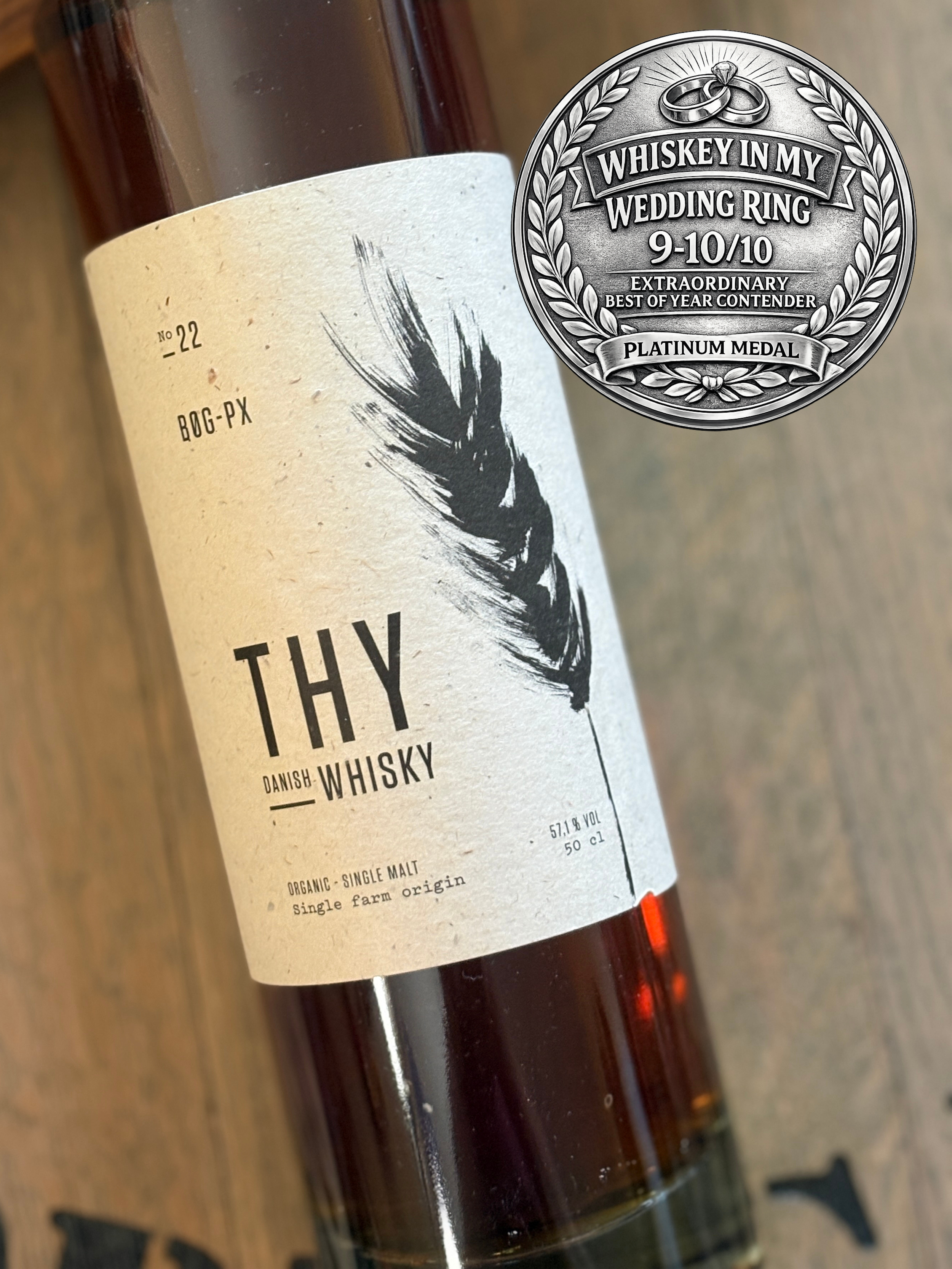
Thy Bøg - PX (No. 22) Organic Danish Single Malt: Specs
Thy Bøg - PX was the 22nd release in Thy’s original numbered series, which began with No. 1 in 2014 and served as the distillery’s playground for different grains, casks, strengths, and production ideas before ending with No. 24. Bøg-PX is made from 100% estate-grown Odyssey barley, all beechwood smoked, and matured in PX with a smaller oloroso component (6:1) before bottling at 57.1%.
On paper, 100% smoked malt plus PX sounds like it should be enormous. Instead, both are surprisingly restrained. The PX adds weight and texture without turning syrupy, while the beechwood stays in the background rather than becoming the whole show. Even at 57.1%, the proof mostly keeps everything in balance, carrying baker’s chocolate, pecans, white pepper, and fruit lacquer through the finish.
This is masterful. Two very powerful components could easily have buried the underlying whisky, but Thy keeps both in check and lets that dark chocolate, grain-driven house style remain front and center. I cannot say enough good things about this one.
Classification: Danish Single Malt Whisky
Producer: Thy Distillery
Grain Bill: 100% Beechwood-Smoked Malted Barley
Proof: 114.2º (57.1% ABV)
Age: 3+ Years Old
Location: Denmark
Thy Bøg - PX (No. 22) Organic Danish Single Malt Price: $88
Thy Bøg - PX (No. 22) Organic Danish Single Malt: Tasting Notes
Eye: Orange amber. Thin circlet rims and legs, tiny teardrops.
Nose: Brownies in the oven, cookie dough on the counter. Despite these scents, the PX is barely there, so not oversweet. Beechwood smoke is subtle, also surprising given the 100% beechwood-smoked barley, you really have to search for it. Mild proof, dark tempranillo wine casks.
Palate: The Thy core flavor is immediate in both the beechwood and the clean barnyard with a strong chocolate undertone. Hazelnut chocolate, rounded peppery hit front half of the tongue, extra dark cocoa, raisins, and almonds toasting. Mouthfeel is piquant and creamy, unctuous PX, mild astringency, red fruit in super dark chocolate, medium-bodied.
Finish: Baker’s chocolate, pecans, white pepper, lacquer grows as it sits. The PX remains a backbone rather than front-facing, as does the beechwood. Medium-length, proof heat keeps the balance in check.
Overall: Masterful. To have such powerful flavors - PX and 100% beechwood-smoked barley - as components and to have the balance just right so that the underlying Thy character is never lost is astounding. The chocolate is dark and mouthwatering, Thy’s calling card. I cannot say enough good things about this.
Final Rating: 9.6
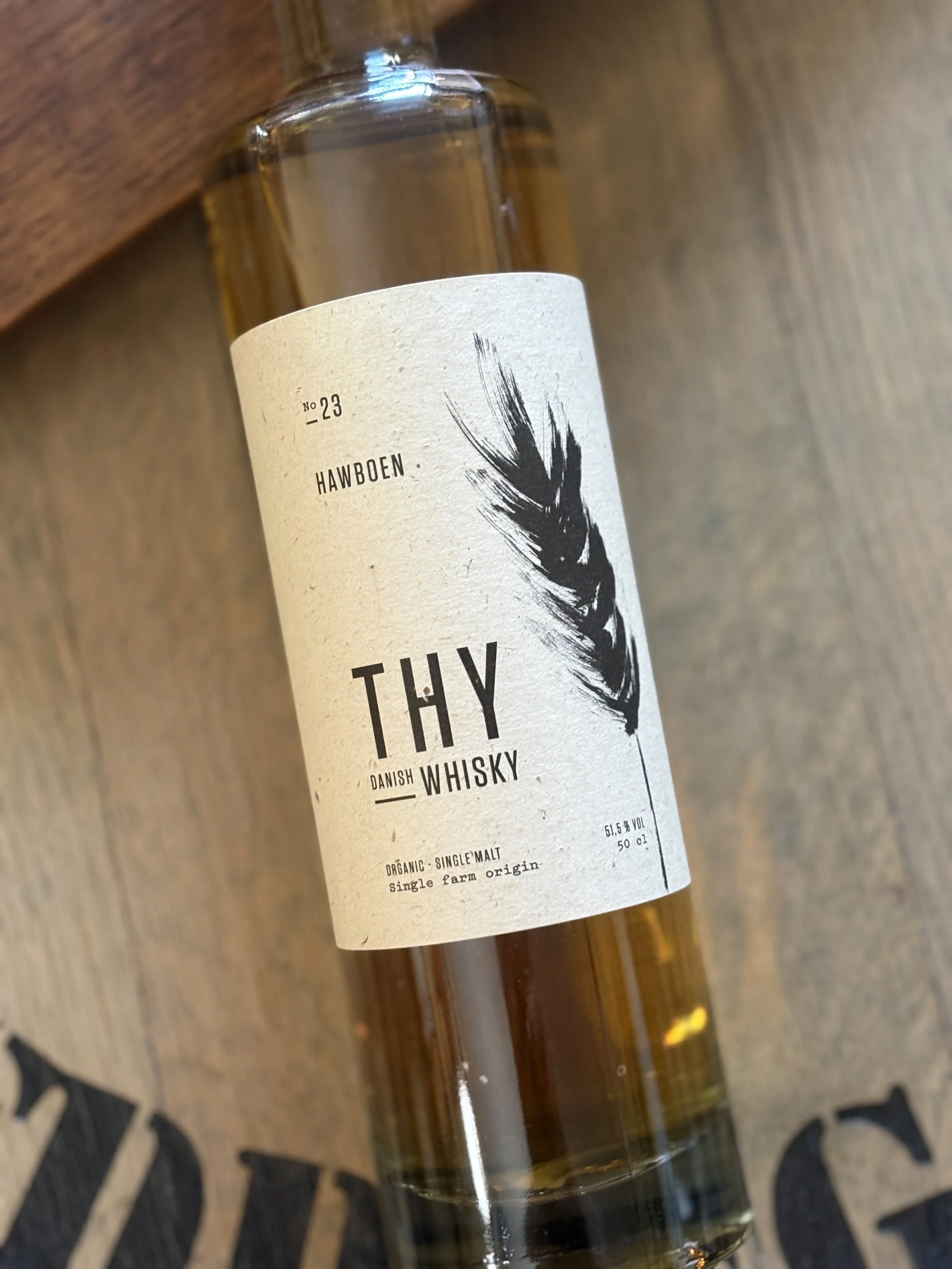
Thy Hawboen (No. 23) Organic Danish Single Malt: Specs
Hawboen was the 23rd release in Thy’s original numbered series, which ran from No. 1 through No. 24 and functioned as their test bed for different grains, cask types, strengths, and production ideas. No. 23 is a pure bourbon-cask release made from estate-grown Odyssey barley, with 64% beechwood-smoked malt and 36% pale malt, aged across a mix of quarter casks, an octave, and larger bourbon barrels before bottling at 51.5%. Thy dedicated the release to the hawboerne, the sea dwellers of the Thy coast.
Classification: Danish Single Malt Whisky
Producer: Thy Distillery
Grain Bill: 100% Malted Barley
Proof: 103º (51.5% ABV)
Age: 3+ Years Old
Location: Denmark
Thy Hawboen (No. 23) Organic Danish Single Malt Price: $110
Thy Hawboen (No. 23) Organic Danish Single Malt: Tasting Notes
Eye: Hay yellow. Syrupy falling rims and legs, oily drops.
Nose: The beechwood smoke is present but far from dominant, a pleasant undertone accompanying lemony malt. Grilled citrus, charred and zesty. Mild proof, no overt oak. Yellow fruit, unusual for bourbon casks.
Palate: Yellow fruit and tip-of-the-tongue soft peppercorn spice, slightly numbing, hay on the ground of fruit orchards. Buttery and dry simultaneously. Juicy Fruit gum and a hint of Rainier cherries. Wintermint, a tough grassy. Mouthfeel is astringent across the whole palate, neither oily nor creamy. Wisps of smoke, like bark on a brisket, settles slowly along the tongue.
Finish: The light smoke remains a background puff, quite well balanced compared to some powerful woodsmoke whiskies I’ve tried. Medium-length and piquant, yellow fruit-heavy.
Overall: Deliciously well-balanced and drily fruity. The smoke is an accent rather than the main player, letting the malt and cask shine. Evokes being in a Nordic forest. A little red fruit would take this to the next level - I think it needs just that little piece of sweet or bright fruit to round out the astringency.
Final Rating: 7.7
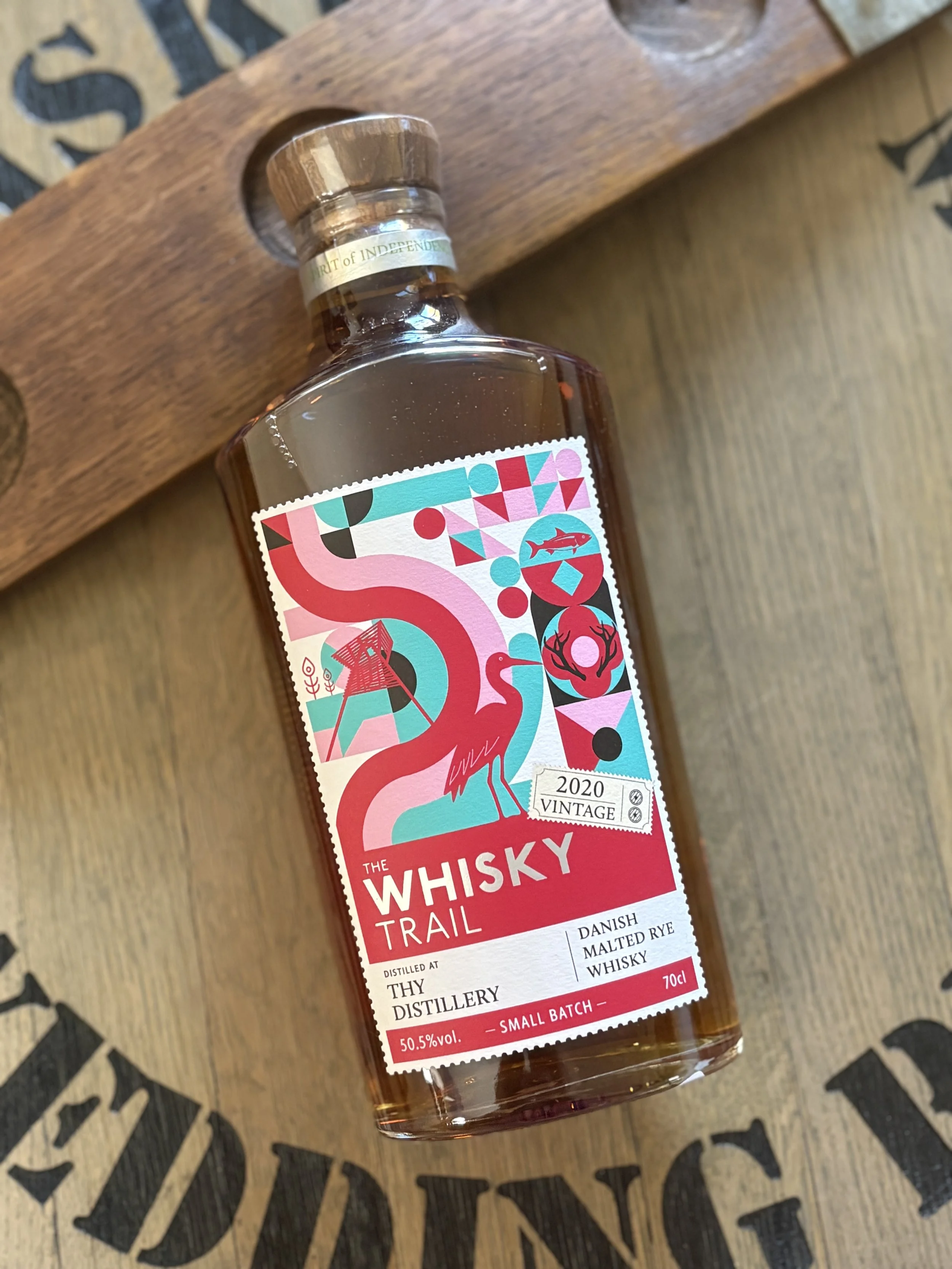
Whisky Trail Thy Danish Spelt Rye 2020: Specs
This Whisky Trail bottling is a four-year-old Thy distilled in 2020 and selected by Elixir Distillers, which brings back the Sukhinder Singh connection from my conversation with Jakob. The mashbill is 60% organic Danish rye, 30% spring barley, and 10% spelt, matured entirely in new American oak quarter casks and bottled at 50.5%.
The extra rye is obvious compared with Thy’s Organic Single Malt. There’s more pepper and clove, toasted rye and pumpernickel, frying herbs, pine, and fresh hay, but the familiar Thy chocolate and citrus are still easy to find. Orange marmalade turns into baker’s chocolate and orange-chocolate segments on the palate, while dry cherries and a little red fruit keep it from becoming entirely grain and spice.
I’m less certain I could pick the spelt out blind. Thy and Sukhinder describe it as bringing sweeter, nuttier character, and I suspect some of the silky texture and the way the spice softens into chocolate and fruit may be where it shows itself. At only 10% of the mashbill, I wouldn’t expect it to announce itself as clearly as the rye.
I prefer the balance of the Organic Single Malt, but this is a useful look at another side of Thy. It’s sharper, breadier, and more pepper-forward, while still carrying the dark chocolate, citrus, and clean farm character that have been consistent across the range.
Classification: Danish Malted Rye Whisky
Producer: Thy Distillery
Grain Bill: 60% Danish Malted Rye, 30% Spring Barley, 10% Spelt
Proof: 101º (50.5% ABV)
Age: 4 Years Old
Location: Denmark
Whisky Trail Thy Danish Spelt Rye 2020 Price: $145
Whisky Trail Thy Danish Spelt Rye 2020: Tasting Notes
Eye: Green tea. No rims, very thin legs, tiny irregular droplets.
Nose: Sweet like the organic was, with a savory edge of frying herbs and fragrant rye bread. Citrus marmalade, extra dark chocolate, and dry cherries. Pine trees, woodland scents, hint of red fruits like a short oloroso finish.
Palate: Clean barnyard and fresh hay, clearly more peppery and clove-forward than the core Thy release of 100% malted barley. Rye and pumpernickel bread toasted, the citrus marmalade continuing to grow. Baker’s chocolate, orange-chocolate segments, a light grassy undertone. Mouthfeel is silky, medium-bodied, cooling, the pepper lessening as the chocolate and white/yellow fruit grow.
Finish: Flash of white pepper, then chocolate with a light orange touch flows over the whole palate. Light, medium-length, cooling, oily.
Overall: Sharper and less balanced than the organic, leaning into the chocolate as well as the extra pepper and bready flavors from the rye. I’m not totally sure what the spelt brings to this flavor-wise, as all of the flavors are identifiable from other Thy releases, but perhaps more spice and mouthfeel?
Final Rating: 6.6
More Show Notes