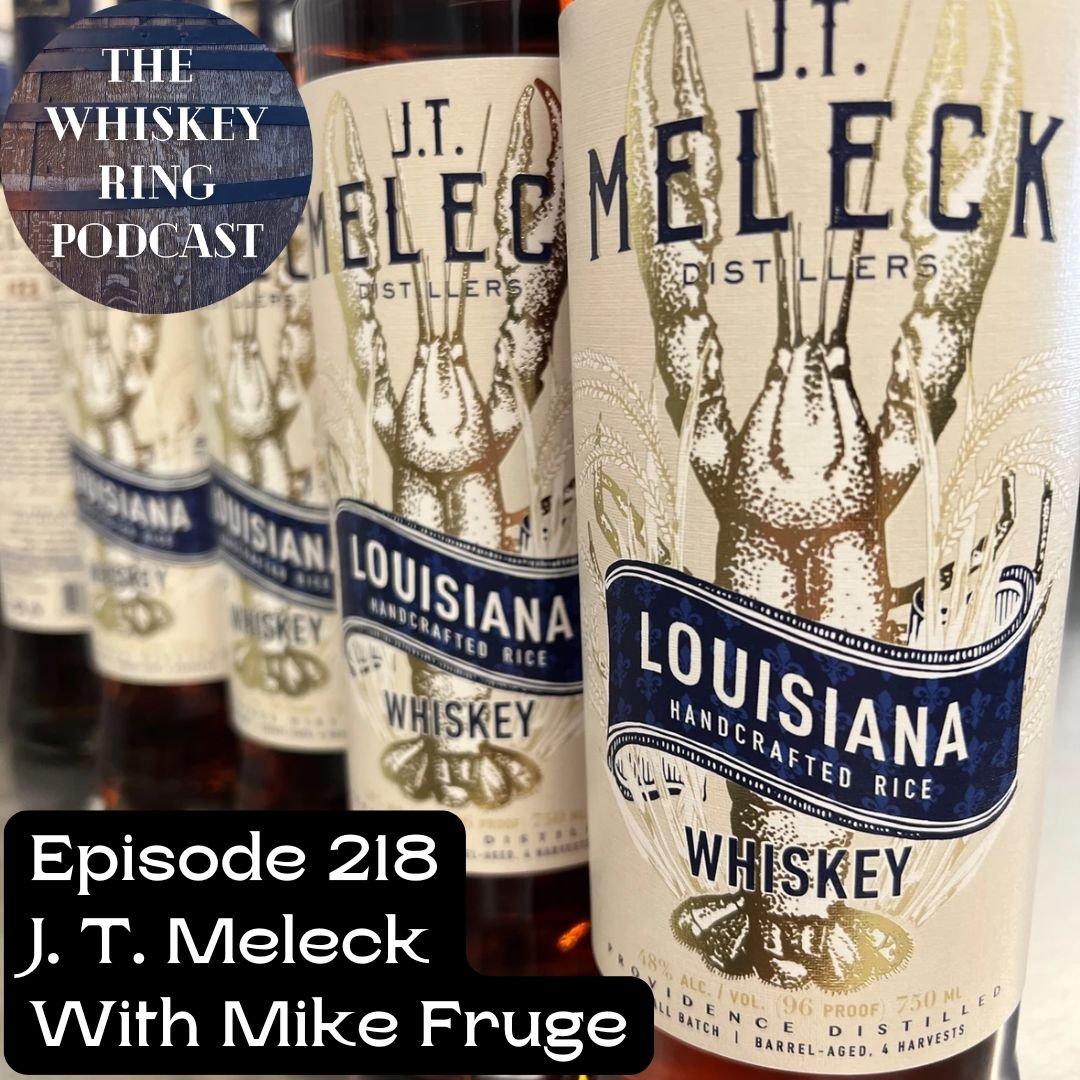
J. T. Meleck Distillery with Mike Fruge Show Notes
Why Louisiana Rarely Shows Up in American Whiskey
On this episode of The Whiskey Ring Podcast, I finally made it to a state we don’t talk about nearly enough in American whiskey: Louisiana. I sat down with Mike Fruge, co-founder of JT Meleck, to understand why Louisiana has so few distilleries, and how one rice farm ended up creating one of the most distinctive whiskey projects in the country.
Louisiana’s absence from the whiskey conversation isn’t accidental. Geography, agriculture, climate, and history all played a role. Whiskey never became a natural extension of farming here the way it did in Kentucky or Pennsylvania. Rice and sugarcane dominated, distilling never fully took root, and Prohibition erased whatever momentum might have existed. What JT Meleck is doing today isn’t a continuation of tradition. It’s the beginning of one.
From a Losing Crop to a Distilling Question
Mike’s story doesn’t start with a passion for whiskey. It starts with a problem. In the mid-2010s, rice prices collapsed so badly that planting a crop meant locking in a loss before the first seed hit the ground. For a farmer, that’s not just a bad year. That’s an existential moment.
The question became straightforward and brutal: how do you add value to what you already grow?
When Mike began asking distillers about rice, most didn’t have answers. Corn, rye, wheat, and barley came with centuries of precedent. Rice didn’t. That lack of precedent became the opportunity, but it also meant there was no roadmap to follow.
What Makes Rice Whiskey Different
Rice behaves differently at every stage of production. It ferments more slowly. It carries natural sweetness. It contains oils that don’t always behave once water is added back during proofing. These weren’t theoretical challenges. They were problems learned through experience, including hard lessons about flocking, filtration, and stability.
Much of the advice Mike received circled back to bourbon, and only worked up to a point. Rice simply doesn’t follow the same rules. JT Meleck’s process had to be built through trial, error, and repetition. That’s where the farmer mindset shows itself most clearly. When something breaks, you don’t outsource the answer. You learn why it broke and fix it yourself.
Vodka as the Unexpected Foundation
Like many craft distilleries, JT Meleck released vodka first to generate cash flow while the whiskey aged. What surprised Mike was how important that vodka became. Built on the same rice varieties as the whiskey, it wasn’t neutral or forgettable. It had texture, sweetness, and character. I got a specific note of twisted soft serve ice cream, when you get a bit of both chocolate and vanilla on the same spoonful.
To this day, the vodka outsells the whiskey. It introduces consumers to rice as a distilling grain long before they ever reach for a whiskey bottle. What was meant to be temporary became foundational.
Aging and Growth in a South Louisiana Climate
Aging whiskey in South Louisiana doesn’t look like aging whiskey in Kentucky. Extreme heat, humidity, and seasonal swings shape how barrels mature. Mike described a winter “sweat” when the whiskey seems to hit peak balance before summer heat drives it deeper into the wood.
JT Meleck releases whiskey in batches as barrels come into their window, often averaging four to five years old after multiple summers and winters. Growth is cautious by design. The distillery could scale quickly if it wanted to, but risk, not equipment, is the real constraint. Every barrel filled today represents a decision that won’t fully reveal itself for years.
COVID made that reality even clearer. When grocery store tastings disappeared overnight, so did the brand’s primary connection to consumers. Whiskey still went into barrels, but education stopped. Rebuilding that face-to-face connection has taken years.
Building Something Meant to Last
Despite constant requests, JT Meleck still doesn’t have a tasting room. Not because it wouldn’t work, but because focus matters. Farming, seafood, and distilling all live under the same family umbrella, and time is the one resource that can’t be expanded. When a tasting room happens, it needs to be done right, not halfway.
This conversation was a reminder that some of the most compelling whiskey stories aren’t driven by trends or hype. They’re driven by necessity, patience, and place. JT Meleck exists because rice needed another future, and because one farmer decided to ask a question no one else was asking.
That’s often how new whiskey traditions begin.
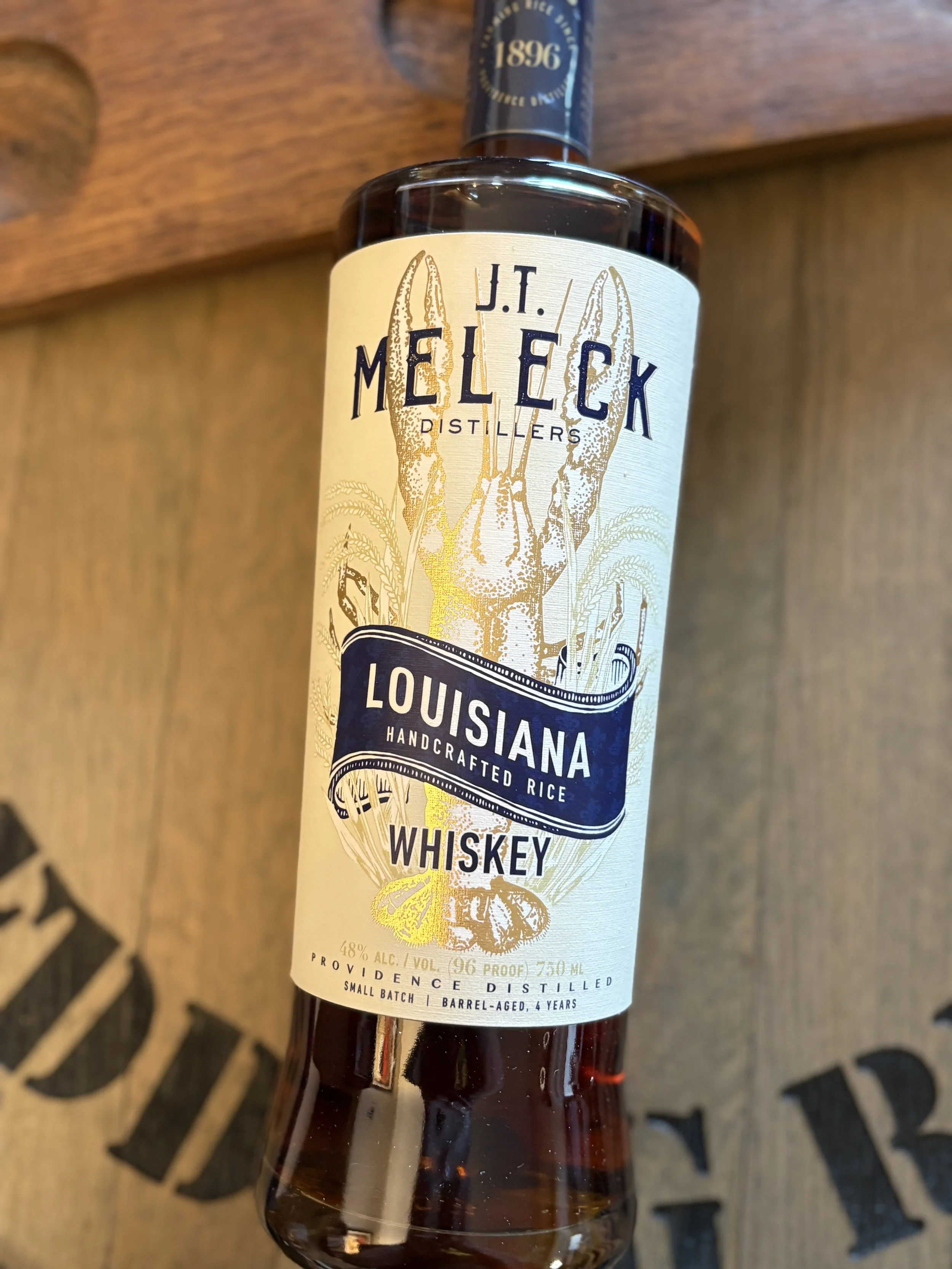
J. T. Meleck Louisiana Rice Whiskey
J. T. Meleck Louisiana Rice Whiskey: Specs
Classification: American Whiskey
Producer: J. T. Meleck Distillery
Grain Bill: 100% Louisiana Rice
Proof: 96º (48% ABV)
Age: 4+ Years Old
Location: Louisiana
J. T. Meleck Louisiana Rice Whiskey Price: $44.99
J. T. Meleck Louisiana Rice Whiskey: Tasting Notes
Eye: Mahogany - quite dark while remaining clear. Medium syrupy rims and legs, large drops.
Nose: Baking spices smack my nose. Lots of new American oak, char and newer wood (note: not green wood, I mean a fresh barrel). Cinnamon-spiked caramels. Vanilla custard. Mint over the nose, oversteeped black tea with honey.
Palate: Softer than expected, slips under the tongue then rolls back over the top. Dark fruit leather, fig jam, mild astringency on the front half of my tongue. Dried cherries and a shot of cinnamon. Mouthfeel is medium bodied, coating over the whole tongue. Grows on the chew, settling mid-tongue. Spice is strong but controlled, spreads out to the sides and back of the palate, too.
Finish: Astringency grows alongside cherry syrup and dried cherries/red stonefruits. Coating, velvety, medium to long finish. Hint of mint from the nose returns. Dry baking spices remain for quite some time, with late-arriving semisweet chocolate.
Overall: The late chocolate edge keeps the whole thing going much longer than I expected, and I love it. I’m not sure if it’s from the cask or the whiskey: the vodka having a chocolaty flavor leads me to believe it may be from both. It’s at once quite familiar for a bourbon drinker from the strong new American oak and markedly different once the complexities roll out. The chocolate tastes like someone’s added coffee to it to accentuate the cacao without adding actual coffee notes. Dark fruit leather, figs, and dates counter this nicely. Sweeter than a “bourbon” but not so much that you’d question if it were a whiskey. Fantastic way to introduce your brand, and the sweetness allows for a higher proof than a new drinker might otherwise be able to handle.
Final Rating: 7.6
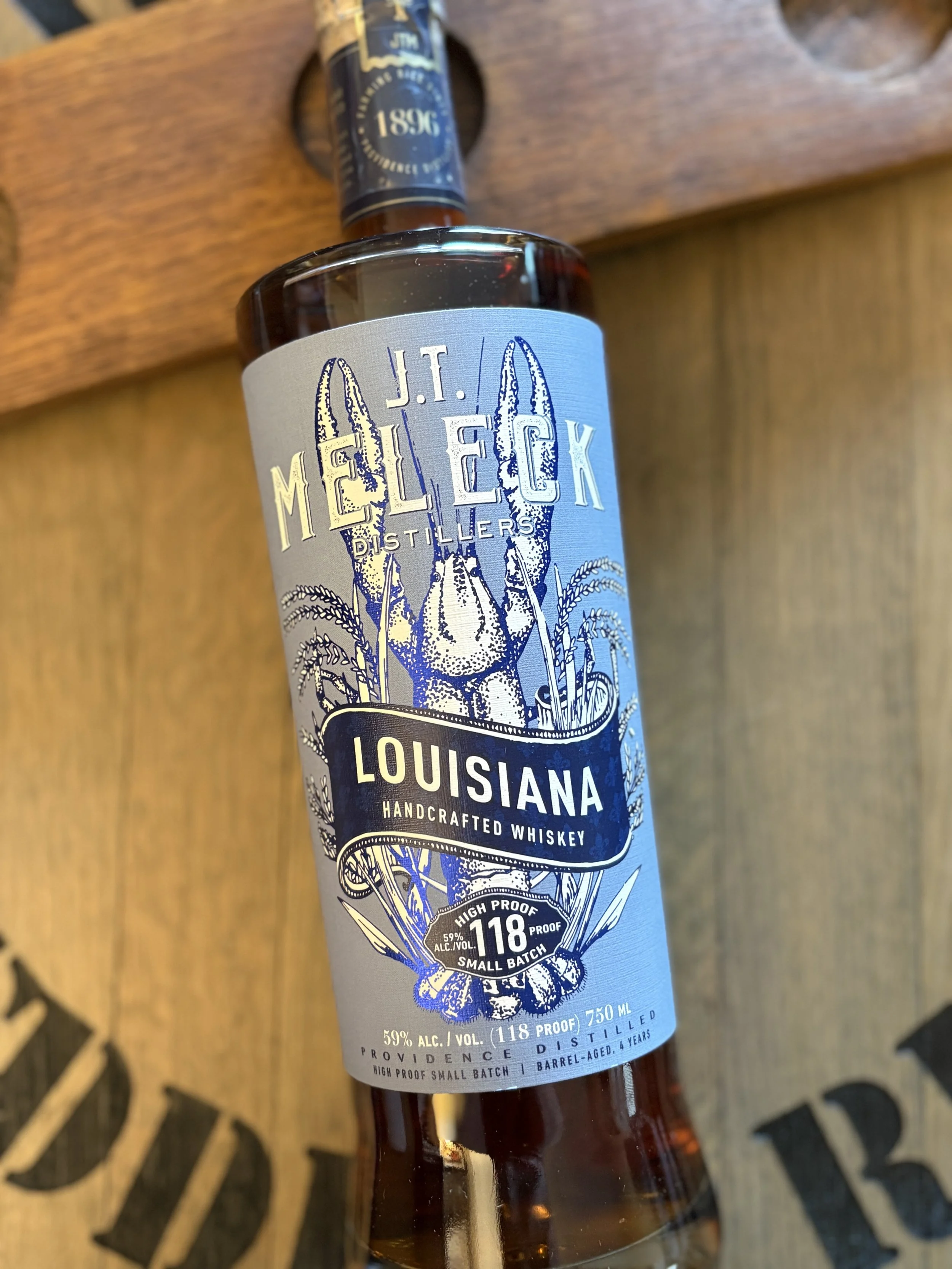
J. T. Meleck Louisiana Rice Whiskey High Proof
J. T. Meleck Louisiana Rice Whiskey High proof: Specs
Classification: American Whiskey
Producer: J. T. Meleck Distillery
Grain Bill: 100% Louisiana Rice
Proof: 118º (59% ABV)
Age: 4+ Years Old
Location: Louisiana
J. T. Meleck Louisiana Rice Whiskey High Proof Price: $59.99
J. T. Meleck Louisiana Rice Whiskey High Proof: Tasting Notes
Coming tomorrow!
Final Rating: —
10 | Insurpassable | Nothing Else Comes Close
9 | Incredible | Extraordinary
8 | Excellent | Exceptional
7 | Great | Well above average
6 | Very Good | Better than average
5 | Good | Good, solid, ordinary
4 | Has promise but needs work
1-3 | Let’s have a conversation
More Show Notes