Waterloo Gin with Justin Meigs Show Notes
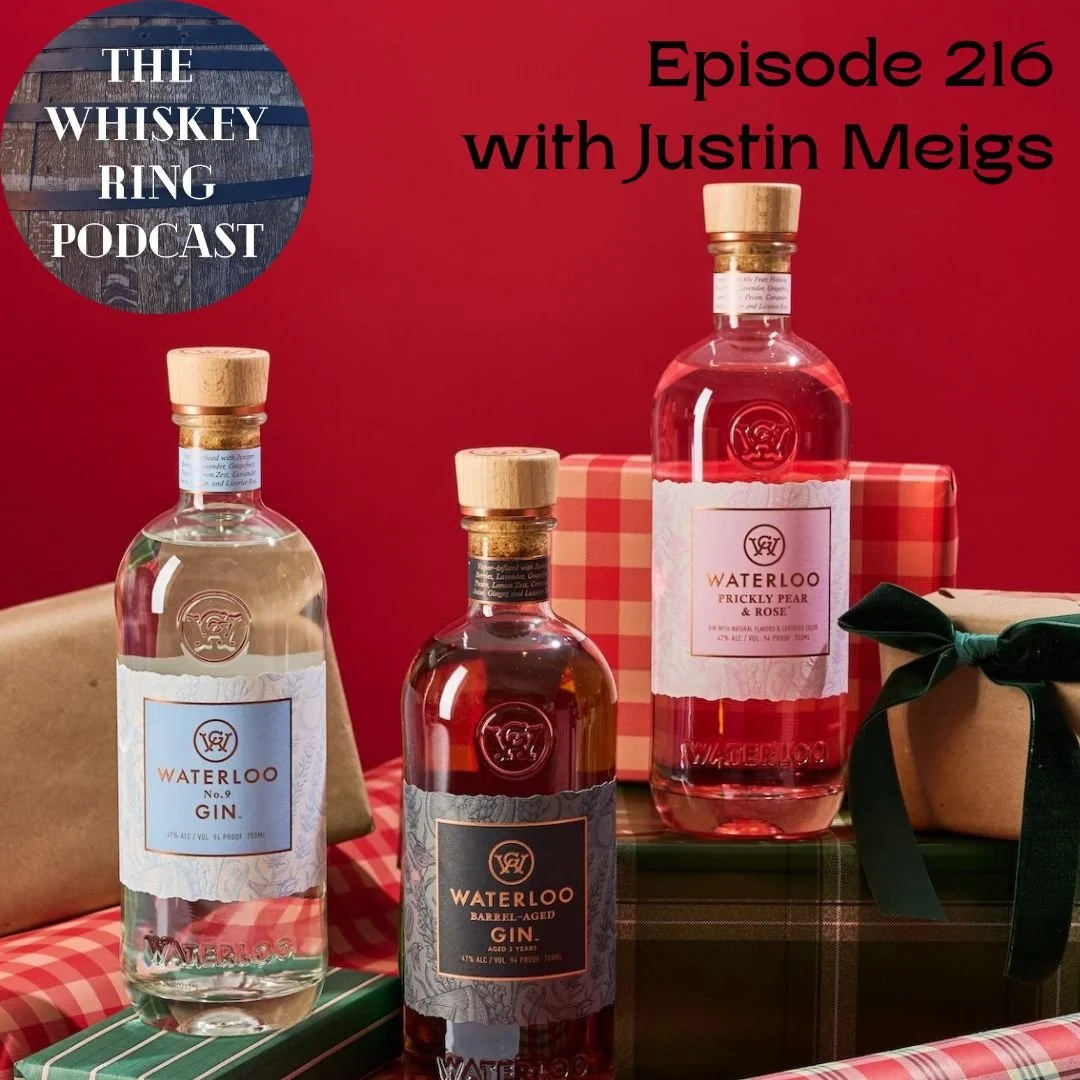
I know, I know…a gin episode? I haven’t done a full-on gin episode since Ep. 102 with Big Bertha’s Irish Gin, a little over two years ago. And frankly, I was at first skeptical of taking on another one. After tasting through Waterloo Gin and talking with CEO Justin Meigs, I’m no longer a skeptic.
Companies regularly send gins and vodkas along with whiskey samples, evidence of their product while their whiskey is or was aging. I enjoy gins far more than I talk about - the best ones highlight a new style or the local flavors (hello, Isle of Harris Gin and Brookie’s Gin from Australia).
Most of the gins I get are average. They’re flavorful, not vodka-like NGS, and at worst they’re useful in a Negroni. Few make their mark, and fewer do it with purpose (same examples apply).
Waterloo Gin isn’t a new company: it was born at Treaty Oak Distilling in Texas in 2009, where the original No. 9 recipe and Barrel-Aged Gin were developed. Then, in 2024, Waterloo was spun off and bought as a separate entity. It would still be distilled at Treaty Oak, but for all other intents and purposes it ceased to be tied there. Purchaser John Paul DeJoria, founder of Patron Tequila, sent the brand through a packaging refresh (but not process) while bringing in Meigs as CEO from the Empress Gin team.
Waterloo’s calling card is incorporating the local Texas Hill Country flora. While the standard gin ingredients are there in the No. 9 Gin - juniper, of course, plus licorice root and coriander with a mix of citrus - the inclusion of pecan is a new one for me. There’s really no nutty flavor; rather, it’s the oils, the fatty mouthfeel the pecans impart, that make what could otherwise be a very good but unremarkable gin into one that’s sippable on its own and won’t be lost in a cocktail. You get a New American-style gin, light on the juniper and heavier on the floral and citrus, with a fatty base to carry it and leave a trace on your tongue. The lavender is a nice touch, too. With all components vapor distilled in a gin basket (not even the roots are macerated), the flavors are complex and delicate, just wonderful.
The Barrel-Aged gin is also its own beast. I love barrel-aged gins, and there are so few of them. My go-to had been Rehorst Barrel-Aged Gin from Great Lakes Distillery; this one might take over the lead. Since the company started at Treaty Oak, I initially expected the barrels used for aging to be ex-Treaty Oak barrels, but nope, they are all new American oak, freshly charred. The caramel hue in the bottle could only be from new oak and Texas weather. Despite this, it’s far from overoaked, and highlights the vanillas and floral tones I hadn’t gotten at first in the No. 9 unaged gin.
Finally, the new release from September 2025 - the Prickly Pear & Rose Gin. This new take on the No. 9 adds hibiscus, rose, and prickly pear, all grown readily on the Texas Hill Country. This is my favorite of the three. What could have been a floral, flowery mess of sweetness is balanced, silky, and only sweet enough to be enjoyable. Hibiscus gives the color, but rose and prickly pear give the flavor. If you’ve never had prickly pear, it’s the fruit of a cactus and one of several fruits that currently drives the pink gin craze. It’s also the base of my favorite local cocktail, a frozen prickly pear margarita.
All in all, I’m happy I took the chance on doing another gin-only podcast. Maybe it’s an every-two-year cadence, or whenever one worthy of this kind of attention comes along independently of a whiskey brand.
Thank you to Big Thirst and Waterloo Gin for the provided bottles free of charge. All opinions are my own.
10 | Insurpassable | Nothing Else Comes Close
9 | Incredible | Extraordinary
8 | Excellent | Exceptional
7 | Great | Well above average
6 | Very Good | Better than average
5 | Good | Good, solid, ordinary
4 | Has promise but needs work
1-3 | Let’s have a conversation
More Show Notes