The Bard Distillery with Kim and Thom Bard
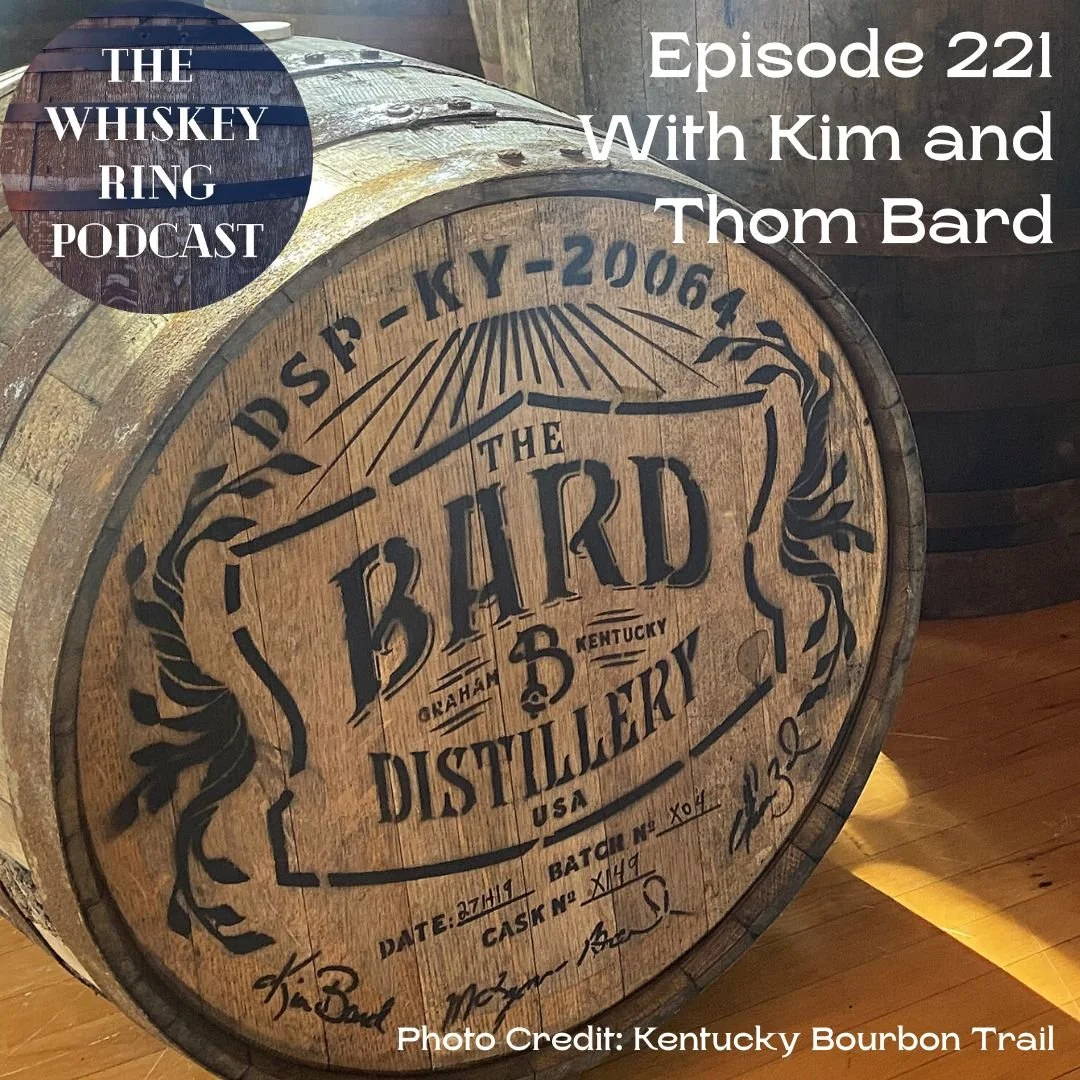
From a Forgotten Schoolhouse to the Kentucky Bourbon Trail
Some distilleries begin with a still. Others begin with a building, a memory, and a stubborn belief that something meaningful can be rebuilt if you’re willing to do the work. Bard Distillery is firmly in the second camp.
When I sat down with Kim and Thom Bard for this episode of the Whiskey Ring Podcast, the conversation quickly revealed that bourbon was never just the destination. It was the outcome of persistence, legacy, and an unusually long view of what it means to build something that lasts.
Thom’s family history is tied directly to Kentucky bourbon lore. His fourth great-grandfather helped found Bardstown, a fact that has followed him his entire life. Yet for generations, the Bard family remained consumers rather than producers. Bourbon was admired, not made. That changed in 2006 with two unplanned tours at Maker’s Mark, including one led by Bill Samuels himself. What began as curiosity turned into an idea that took nearly two decades to fully materialize .
From Motorsports to Mash Bills
Before bourbon, Kim and Thom lived in the world of motorsports. NASCAR schedules, crew work, constant pressure, and nonstop travel shaped how they think about risk, endurance, and problem-solving. That background matters more than it might seem. Running a small distillery, especially one built largely by hand, requires nerves of steel and a tolerance for stress that doesn’t fade when things go wrong.
Kim jokes about still chasing adrenaline, whether behind the wheel or inside the business. Thom describes the transition more bluntly. Motorsports teaches you how to work long hours, absorb setbacks, and keep moving forward without romanticizing the grind. That mindset became foundational once Bard Distillery moved from idea to reality.
Choosing the Hardest Possible Location
When it came time to choose a site, the easy answer would have been somewhere near the bourbon triangle. Instead, the Bards chose something far more personal and far more difficult: a 33-acre former school campus in Muhlenberg County, a coal town whose identity had faded along with its industry.
The buildings dated back to the 1920s. They were art-deco in spirit, structurally sound in places, and deeply neglected after decades of abandonment. For Thom, the site carried personal history. Multiple generations of his family had gone to school there. For the town, it represented both pride and loss.
Reviving the campus wasn’t just about building a distillery. It was about giving the community something recognizable again. Today, locals still refer to it as “the school,” even as bourbon ages inside its walls. That dual identity feels fitting.
Learning from the Best, Surviving the Reality
Bard Distillery didn’t grow in isolation. Kim and Thom openly credit mentors who helped them survive the early years, including Lisa Wicker, Paul Tomaszewski, and the teams at Casey Jones and Maker’s Mark. Their stories reflect an industry that, despite competition, often chooses collaboration over secrecy.
That generosity mattered most during moments when Bard needed help immediately. From labeling emergencies to regulatory battles, the support wasn’t theoretical. It was practical, timely, and sometimes the difference between staying open and missing a release.
Thom also brings something else to the table: a finely tuned “bullshit meter.” As a mechanical engineer, he knows enough to recognize when equipment, timelines, or promises don’t add up. That skepticism has saved Bard millions in avoided costs, even if it means projects sometimes move slower than planned.
Small Stills, Big Patience
For years, Bard distilled on two 60-gallon pot stills, producing just two to three barrels a week while sleeping on bleachers and juggling everything else required to keep the business afloat. Those stills made beautiful whiskey, but they couldn’t support long-term growth.
That’s now changing. A Vendome column still, 14 inches wide and 34 feet tall, has arrived and is being installed piece by piece. When fully operational, it will allow Bard to move from survival mode to sustainability, laying down enough bourbon to support the distillery’s future without sacrificing identity.
The transition isn’t rushed. Kim and Thom are intentionally dialing things in, knowing that consistency matters more than speed. The whiskey still has to taste like Bard.
Two Lines, One Philosophy
Bard’s portfolio reflects both necessity and intention. The Muhlenberg line is their house-made, wheated bourbon, inspired by the profile that first captured their imagination at Maker’s Mark. It represents the long game. Time, patience, and restraint.
Cinder & Smoke, by contrast, is a sourced and blended line that allowed the distillery to generate cash flow while its own bourbon aged. Rather than treating it as a placeholder, the Bards embraced blending as an art. That line remains a permanent part of their identity, increasingly incorporating Bard-distilled whiskey as it becomes available.
Flavored whiskeys and cream liqueurs helped bridge the earliest years. Clear spirits like Silver Mule came and went as production realities demanded. Every decision was made with an eye toward survival without compromising integrity.
A Different Kind of Bourbon Trail Experience
Bard Distillery now sits proudly on the Kentucky Bourbon Trail, complete with newly installed brown highway signs that finally pull travelers off the parkway. Western Kentucky doesn’t have the foot traffic of Bardstown or Louisville, but it offers something different: time, space, and connection.
Visitors aren’t rushed through. They’re welcomed personally. Conversations linger. The experience feels closer to someone’s home than a factory floor. That intimacy is intentional, and it’s why more people are beginning to treat Western Kentucky as its own bourbon destination rather than a detour.
Built to Last
Bard Distillery is not a story about rapid growth or overnight success. It’s about showing up every day, doing things the hard way, and believing that community, patience, and good whiskey still matter.
From a forgotten schoolhouse to a functioning distillery, Kim and Thom Bard are proving that bourbon doesn’t need shortcuts to be meaningful. It just needs people willing to see it through.
Thank you to Kim and Thom for entering the Whiskey Ring!
If you haven’t joined the Patreon community yet, please consider doing so at patreon.com/whiskeyinmyweddingring
As of December 2025, the $25/month bottle share club level is sold out! There is one member looking to retire - let me know if you'd like the spot!
Join at the $5/month level for first shot at an open spot when a member retires and to keep receiving ad-free episodes via Patreon.
If you haven’t yet, please follow Whiskey in my Wedding Ring and the Whiskey Ring Podcast on Instagram and Facebook and subscribe to the newsletter on the website.
The Bard Distillery
10 | Insurpassable | Nothing Else Comes Close
9 | Incredible | Extraordinary
8 | Excellent | Exceptional
7 | Great | Well above average
6 | Very Good | Better than average
5 | Good | Good, solid, ordinary
4 | Has promise but needs work
1-3 | Let’s have a conversation
More Show Notes