Lost Lantern United States of Bourbon Cask Strength Review
There are blends, and then there are acts of controlled chaos swirling inside a gemstone.
Lost Lantern United States of Bourbon Cask Strength sounds, at first, like it should be too much. Bourbon from all fifty states in one bottle? That is the kind of concept that risks becoming more map than whiskey, more “look what we did” than “look what we made.” Fifty components means fifty voices, fifty climates, fifty grain bills, fifty cooperage decisions, fifty distillation philosophies, and fifty chances for one piece to elbow its way to the front of the stage and ruin the chorus.
Instead, this is one of the clearest examples yet of what Lost Lantern does well: blending American whiskey without sanding away the character that made the components interesting in the first place.
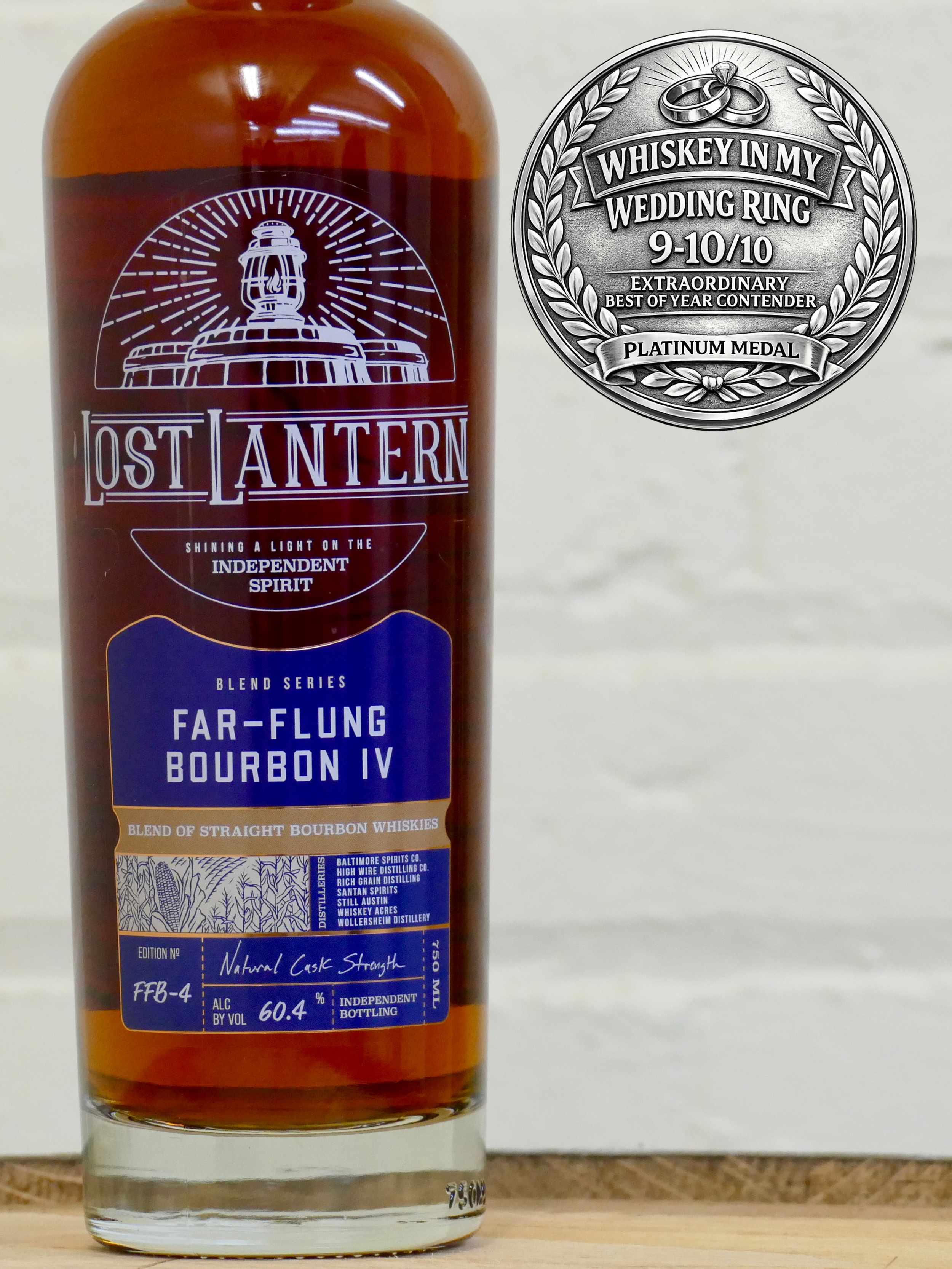
I’ve written about Lost Lantern enough now that their approach is no longer a surprise, but it still deserves attention. Their best blends do not feel like scavenger hunts. They do not ask you to pick out the Kentucky note, the Texas note, the Iowa note, or the Vermont note as if you’re identifying birds by call. When I reviewed Lost Lantern Far-Flung Bourbon IV a few months ago, that was exactly what impressed me. Seven distilleries from seven states, several of which I knew well, came together so cleanly that none of them dominated. I could not pull out a clear “this came from here” fingerprint, and that was praise, not frustration. Far-Flung Bourbon IV went Platinum for me because it was a complete whiskey first and a blend second.
United States of Bourbon takes that same blending idea and scales it to the edge of absurdity.
Fifty components should be messy. It should be noisy. If the goal were to showcase each individual state in a literal way, the whiskey would probably collapse into a committee meeting. Instead, Lost Lantern seems to understand that transparency and cohesion are not enemies. The distilleries can be listed. The story can be wide open. The glass still has to become one thing.
There is also the logistical side, which is easy to flatten into a neat press-release sentence. “Bourbon from all fifty states” sounds tidy once it exists. Getting there is anything but. This took years to come to fruition, requiring many, many trips and an absurd amount of travel, conversation, tasting, and relationship-building. Lost Lantern did not only need fifty partners. They needed fifty partners worth partnering with, all of whom had a bourbon that fit the project and enough of it available to contribute to the blend. That is a very different hurdle than assembling a novelty map.
In the glass, United States of Bourbon is dark amber, with thin rims and short legs.
The nose starts with brown sugar and a touch of fresh clove, then moves into warming dark honey, sugared grapes, and oatmeal cookies dusted with a little cinnamon. Proof peeks through, but never overwhelms. Slow-roasted corn turns sugary underneath it all, giving the nose a deep bourbon center even as the fruit tones begin to stretch toward something older and more brandy-like.
That brandy comparison grows louder on the palate. I kept thinking of cognac, specifically well-aged cognac in mostly worn casks, where the maturation vessel contributes polish, oxygen, and time without dumping a lumberyard into the glass. This has that kind of élevage. Deep, cooked-down fruit. Grapes and stone fruits reduced until they feel almost spoonable. Then the cask starts to ease in, coating the tongue in a light lacquer.
This is where the blend really separates itself. There is age here, or at least the convincing impression of age, but the whiskey does not become oak soup. It moves into cognac territory that feels 30 to 40 years old in profile: rich fruit, soft grip, dark sweetness, and worn-cask elegance. The mouthfeel is velvety, with mild spice building mid-tongue before white pepper moves forward into ginger molasses cookies.
At 123 proof, this should push harder. It does not. The proof is remarkably restrained, especially given the depth of flavor. I’m not saying this drinks like an 86-proof shelfer. It has weight, concentration, and heat where it needs them. The surprise is how well the proof serves the structure instead of stamping over it with steel-toed boots.
The finish lengthens around ginger molasses, growing stronger without becoming too sweet. The fruit hangs on. The spice stays measured. Finally, the old-cask astringency comes out near the end, mild and deliberate, like underlining a sentence rather than circling it in red ink. It gives the finish definition and keeps all of that cooked fruit from going syrupy.
The more I sat with this, the more I kept coming back to the blending.
When you blend fifty components together, you almost guarantee that the individual pieces will be impossible to isolate. That is not a flaw. It is the assignment. The real question is whether the components disappear into harmony or dissolve into mud. United States of Bourbon lands firmly in the first camp. This is a masterful elevation of blending, taking the skill Lost Lantern has shown in previous releases and pushing it into a much harder format.
Johnnie Walker Black Label is one of the iconic examples of high-volume, multi-component blending, with around forty malt and grain whiskies often cited in the mix. Johnnie Walker Blue is sometimes described as going even higher, though exact component counts are harder to pin down. Whatever anyone wants to say about Johnnie Walker, the blending leads the world for a reason. Consistency, balance, and scale are brutally difficult.
With due respect to Black and Blue, the flavors and mouthfeel here are in another conversation entirely. United States of Bourbon is not trying to do what blended Scotch does, and it does not need to. This is American bourbon viewed through a blender’s lens, built from loud components that somehow avoid shouting over each other. Having tasted many of the bourbons involved in this project across previous reviews, episodes, and distillery deep dives, I can say there were no “quiet” components hiding in the back row. Getting them to form a cohesive whiskey is the achievement.
It also draws a clear line from Far-Flung Bourbon IV to here. Far-Flung Bourbon IV was, for me, slightly superior, perhaps because it was more focused. It did not have to answer the logistical summons of including every state in the country. It could be built around a tighter, more selective structure. United States of Bourbon has a different challenge. It has to carry the weight of the concept while still tasting like a finished, intentional whiskey. That makes it no less skillful. If anything, the assignment is harder, even if the final whiskey gives up a small degree of focus in exchange for a much larger statement.
This is not just a bottle with a clever premise. The premise would be worth talking about even if the whiskey were merely good, because bourbon from all fifty states is a legitimate milestone for American whiskey. The liquid earns the attention on its own. It is dark, fruity, velvety, mature, and deeply integrated, with a cognac-esque sense of élevage that I did not expect from a fifty-state bourbon blend.
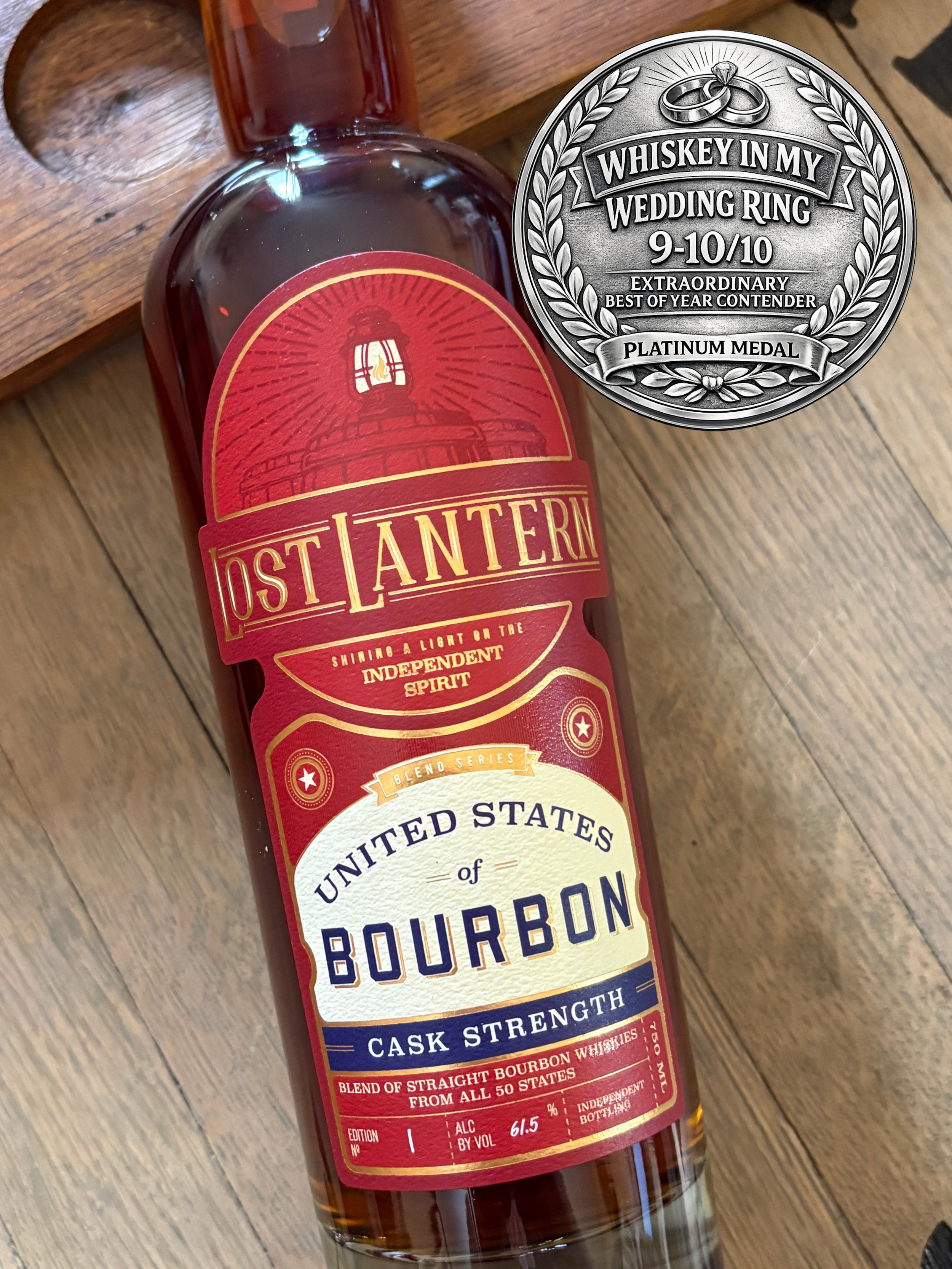
Lost Lantern United States of Bourbon Cask Strength earns a Platinum Medal from me at 9.2/10. It is one of the most impressive blending exercises I’ve tasted from an American independent bottler, and more importantly, it tastes less like fifty bourbons stacked together than one very carefully assembled whiskey with fifty roots.
Partners: Painted Stave Distilling, Liberty Pole Spirits, Sourland Mountain Spirits, ASW Fiddler Distillery, Litchfield Distillery, Triple Eight Distillery, Baltimore Spirits Co., High Wire Distilling Co., Cathedral Ledge Distillery, Reservoir Distillery, Kings County Distillery, Broad Branch Distillery, South County Distillers, Stonecutter Spirits, New Riff Distilling, Leiper’s Fork Distillery, Tom’s Foolery Distillery, Distillerie Acadian, Starlight Distillery, Rich Grain Distilling, Whiskey Acres Distilling Co., Dread River Distilling Co., Hardshore Distilling Co., J. Rieger & Co., Rock Town Distillery, New Holland Distilling Co., St. Augustine Distillery, Balcones Distilling, Cedar Ridge Distillery, Wollersheim Distillery, Corbin Cash Distillery, Far North Spirits, Oregon Spirit Distillers, Union Horse Distilling Co., Smooth Ambler Spirits, Frey Ranch Distillery, Brickway Distillery, Boulder Spirits, Proof Artisan Distillers, Blackfork Farms, Montgomery Distillery, Woodinville Whiskey Co., Day’s Defile, Backwards Distilling Co., High West Distillery, Hochatown Distilling, Safe House Distilling, SanTan Distilling, Denali Spirits, and Ko‘olau Distillery.
Slainte!
Thank you to Lost Lantern and Ten27 for the opportunity to taste this for review. All opinions are my own.
Lost Lantern United States of Bourbon Cask Strength: Specs
Classification: Blend of Straight Bourbon Whiskies
Producer: Lost Lantern Whiskey
Mash Bill: Resulting Mashbill Not Disclosed
Proof: 123º (61.5% ABV)
Age: 2 Years Old, Components up to 10 Years Old
Location: All 50 States
Lost Lantern United States of Bourbon Cask Strength Price: $99.99
Lost Lantern United States of Bourbon Cask Strength: Tasting Notes
Eye: Dark amber. Thin rims, short legs.
Nose: Brown sugar, touch of fresh clove. Warming dark honey, suagared grapes, oatmeal cookies with a little cinnamon. Pruch peeks out but isn’t overwhelming. Slow-roasted corn turning sugary.
Palate: Cognac, well-aged in mostly worn casks where you get a great maturation vessel without much wood influence. Incredibly deep, cooked down fruit, grapes and stone fruits. Cask starts to ease in, coating the tongue in a light lacquer. Cognac engers the 30-40-year-old territory. Mouthfeel is velvety, mild spice mid-tongue with white pepper that moves forward with ginger molasses cookies.
Finish: The ginger molasses strengthens without being too sweet. The proof still remarkably restrained. Long finish finally lets the old cask-driven mild astringency out, like underlining text to emphasize the point.
Overall: When you blend 50 components together, it can be messy - but I guarantee you also won’t be able to pick the components out, either. That’s kind of the point. Still, this is a masterful elevation of blending. Johnnie Walker Black Label, one of the most iconic and best-selling blends in the world, supposedly includes around 40 malt and grain whiskies (Johnnie Walker Blue by some sources counts up to 100, but that’s not definitive), and for whatever you want to say about JW, their blending leads the world for a reason. Lost Lantern’s foray into multi-dozen-component blending showcases the exceptional skill shown in previous blends, amped up by bourbons from all fifty states. With due respect to JW Black and Blue, those flavors and mouthfeels are nowhere near as complex as this - and having tasted many of the bourbons that went into this blend, I can assure you there were no “quiet” components in here, either. Cognac-esque elevage, an intensely fruity and aged bourbon emerging.
Final Rating: 9.2
10 | Insurpassable | Nothing Else Comes Close
9 | Incredible | Extraordinary
8 | Excellent | Exceptional
7 | Great | Well above average
6 | Very Good | Better than average
5 | Good | Good, solid, ordinary
4 | Has promise but needs work
1-3 | Let’s have a conversation
More Lost Lantern Reviews